

Handrail Bracket
Handrail brackets are used to attach a handrail to either a wall, post or piece of glass. They distribute the weight evenly along the length of a handrail, so that it is not concentrated in any one area. This is what gives a handrail its stability and structural integrity.


Why Choose Us
Production Capacity
Our factory covers an area of around 5,500㎡ and we have over 50 front-line workers. We have many advanced machinery equipments.
Fast Delivery
Huge production capacity to ensure in time delivery, and transport to the destination in the first time.
Quality Assurance
In terms of quality assurance, the company strictly follows the standards and norms of the industry quality system. Adopt industry-leading testing equipment to ensure product quality and good reputation.
Customer Service
Our clients are our top priority, and we pride ourselves on providing exceptional customer service from start to finish.
Rich Experience
Has a long-standing reputation in the industry, which makes it stand out from its competitors. With over many years of experience, they have developed the skills necessary to meet their clients' needs.
Efficient and Convenient
The company has established marketing networks around the world to provide high-quality services to customers in an efficient and convenient manner.
Selecting the Right Handrail Bracket
Weight Support
The primary function of a handrail bracket is to support weight. Whether it' s for a private home staircase or a public building, ensure the bracket you choose is capable of handling the expected load.
Heavy-duty brackets are typically designed for higher weight capacities, making them suitable for public or commercial spaces with high traffic.
Wall and Handrail Material Compatibility
The compatibility between the bracket and the materials it will be connected to is critical. For example, a stainless steel bracket is a great partner for a solid wood handrail, providing a secure grip and a pleasing aesthetic contrast.
Make sure to match the bracket material and fasteners with the type of wall, whether that' s drywall, brick, or concrete, to guarantee a secure and suitable fit.
Environmental Considerations
For installations in areas with high humidity, such as bathrooms, or outdoors where the brackets are exposed to the elements, rust-resistant materials like stainless steel or powder-coated metals are advisable.
Design Consistency
While functionality is paramount, aesthetics cannot be overlooked. The bracket should complement the design theme of the space. A contemporary staircase might call for sleek lines and minimalistic designs, while a classic setting might be better suited to ornate, traditional styles.
Ease of Installation and Future Maintenance
Consider how the bracket will be installed and whether it allows for easy maintenance or replacement. A bracket that requires minimal effort to install and maintain can save time and money in the long run.

Handrail brackets shouldn' t be spaced more than a metre apart for stability. You need a wall handrail bracket at both the top and bottom of the stairs, with extras spaced evenly in between. Generally, the handrail bracket at the top and bottom of the stairs are fitted about 30cm from the end of the handrail, with the rest of the brackets evenly spaced between (no more than 100cm apart).
The easiest and preferred installation method for fixing brackets is to mark the wall using a pencil and straight edge. Measure 850mm vertically up from the stair pitch line (the notional line that connects all the stair nosings) at 4 to 5 points and draw a pencil line through these points.
Next, measure where the first and last brackets will go. The easiest way to do this is to draw a vertical straight line up from the nosing of the bottom and top treads respectively. Divide the distance between these points equally, ensuring your brackets won' t be further than 1m apart.
Place your brackets so their straight edge sits on the line, and mark where the screws need to go. Securely attach your brackets to the wall using the provided fittings. It' s really important to make sure they' re firmly fixed so that your handrail is stable.4. Lift your wall handrail into the brackets and mark the fixing holes - we recommend pre-drilling the holes to avoid splintering the rail. It is also important when using oak that the pilot hole is of a suitable size to allow the screw to thread correctly and not break.
Carefully attach the rail to the brackets, and you' re done! If desired, you could stain or varnish the handrail to protect the wood.
How to Install Handrail Brackets
Determine the height of the handrail
Handrail heights for indoor stairs and public spaces must comply with local building codes. For example, public buildings in the United States must comply with the Americans with Disabilities Act (ADA) standards. The height of handrails on accessible ramps must be between 34 and 38 inches.
Determine the position of the handrail brackets
Use a measuring tape, level, and pencil to mark the positions on the wall at 36 to 48 inches. Next, use a drill with the appropriate bit to create holes at the marked locations. The holes should be centered on your pencil marks and match the size of the screws provided with the brackets (if any). Pre-drilling the holes makes it easier to attach the brackets securely to the wall.
Install the handrail brackets
Once you have marked the bracket locations, attach them to the wall by positioning a bracket over a drilled hole. Insert a screw through the bracket and hole, then secure it with a screwdriver or drill.
Handrail brackets may have different numbers of screw holes, and the installation method may also vary.
Install the handrail and inspection
Congratulations! You have reached the final step. Slide the handrail onto the brackets you've installed on the wall. Each handrail has its own installation method, and you may need to use the installation kit provided by the supplier to effectively secure it to the brackets. After all the steps are completed, don't forget to re-inspect, including the height of the handrail, the spacing and angle of the brackets, and whether they are installed securely to ensure safety.
Material of Handrail Bracket
Material is a key consideration when choosing a handrail bracket. It affects the cost, durability, and appearance of the bracket.
The cost and performance of handrail brackets vary depending on the material used. Metal brackets are generally more expensive than plastic brackets, but they offer better durability and safety. This makes them a good choice for modern industrial architectural designs.
Wood
Wood is a natural and beautiful choice for handrail brackets, suitable for traditional and classical design styles. It provides a warm and natural look. It can be made from a variety of wood types, including oak, maple, and pine.
Stainless Steel
Stainless steel is a very common choice for handrail brackets because of its high durability, high loading strength, high corrosion resistance, and modern appearance. It is widely used in both indoor and outdoor applications.
Brass
Brass has a unique golden hue that adds an elegant touch to handrail brackets. It is suitable for traditional or classical designs. However, it is more expensive than other metals and requires regular maintenance to keep its luster.
Aluminum
Aluminum is also a corrosion-resistant and easy-to-maintain material, with a low cost and ease of processing. However, it is lightweight, making it suitable for light-duty applications only.
Plastic
Plastic has the advantages of being lightweight, corrosion-resistant, inexpensive, and easy to maintain. However, it also has some limitations, such as low strength and poor performance in high-temperature environments.
Maintenance and Care for Handrail Brackets
The durability of handrail brackets is not just in their initial quality but also in how they are maintained. Regular care ensures their longevity and preserves their appearance, maintaining the safety and aesthetic of your staircases and walkways.

Cleaning Tips
Routine cleaning is essential, particularly for handrail brackets in high-use areas. For most metal brackets, a soft cloth and a mild detergent are sufficient to remove dirt and fingerprints.
For stainless steel, specialty cleaners can provide a streak-free finish and help prevent rust. Brass and bronze may require specific polishes to maintain their luster while preventing tarnish.

Inspection
Periodic inspections are crucial to spot any signs of wear or damage. Check for any loose screws or brackets and tighten them as needed.
Look for corrosion, particularly if the brackets are in a moist or outdoor environment. Be sure to address it promptly to prevent further damage.

When to Replace
While well-maintained brackets can last many years, they are not indestructible. If a bracket is significantly worn, rusted, or damaged, it' s time to replace it. Upgrading your brackets can also be a safety improvement and an opportunity to refresh the look of your handrails.
By integrating these simple maintenance routines, your handrail brackets will continue to perform their essential role safely and attractively, year after year.
Handrail Bracket Components
Handrail brackets are made up of three to four separate components (depending on the style). Sometimes these parts are supplied separately and need to be assembled onsite, other times they made be pre-assmbled or welded together.
Saddle
Either a straight or curved peice of metal that is used to attach the bracket to the handrail.
Arm
Either a straight or L shaped section of steel that connects the saddle to the wall plate.
Wall Plate
A large plate used to attach the bracket to the wall. This section cannot be removed and is necessary to the stability of the bracket.
Cover Plate
A decorative covering that hides the wall plate/exposed screws.
Design Trends in Handrail Brackets
The world of handrail brackets is not immune to design trends. This year, we' re seeing a blend of both form and function, with a strong emphasis on sleek, modern aesthetics that complement the minimalistic and industrial vibes of contemporary architecture.
Contemporary Designs
Clean lines and unobtrusive designs are taking center stage, with brackets becoming more streamlined and less ornate. The focus is on creating a sense of openness and space, with transparent materials such as glass and acrylic becoming more prevalent, especially in commercial spaces.
Popular Finishes
Matte black continues to be a favorite for its versatility and ability to add a touch of sophistication to any space. However, we' re also seeing a rise in mixed-metal finishes, combining the warmth of brass or bronze with the coolness of chrome or stainless steel for a dynamic look. Satin nickel and oil-rubbed bronze are also on-trend, offering a softer alternative to the starkness of black.
Eco-Friendly Materials
With an increasing focus on sustainability, the use of recycled materials in handrail brackets is gaining popularity. Designers are looking for ways to reduce environmental impact without compromising on strength or style.
Smart Integrations
Technology integration is starting to make its way into the realm of handrail brackets. While still in the nascent stages, there' s a growing interest in brackets that can accommodate smart lighting or sensors to enhance safety and ambiance.
Types of Handrail Brackets
Handrail Brackets for Glass
This type of handrail fittings is designed for railings and balustrades entirely or partially made of glass. The brackets can be installed in the pre-drilled holes and fastened through the glass panel, or fixed between two panels. A cap rail can be added to the top after that.
Handrail Brackets for Balusters
Handrail brackets for balusters can be glued to the top or screwed on the side of the panel. Different models are available on the market, suitable for a range of square and round profiles.
Handrail Brackets for Walls
For handrails fitted to provide additional safety in places such as bathrooms and lifts, brackets designed specifically for walls are the best solution. This type of railing support is available for various distances and tube diameters, with and without rosettes.
Our Factory
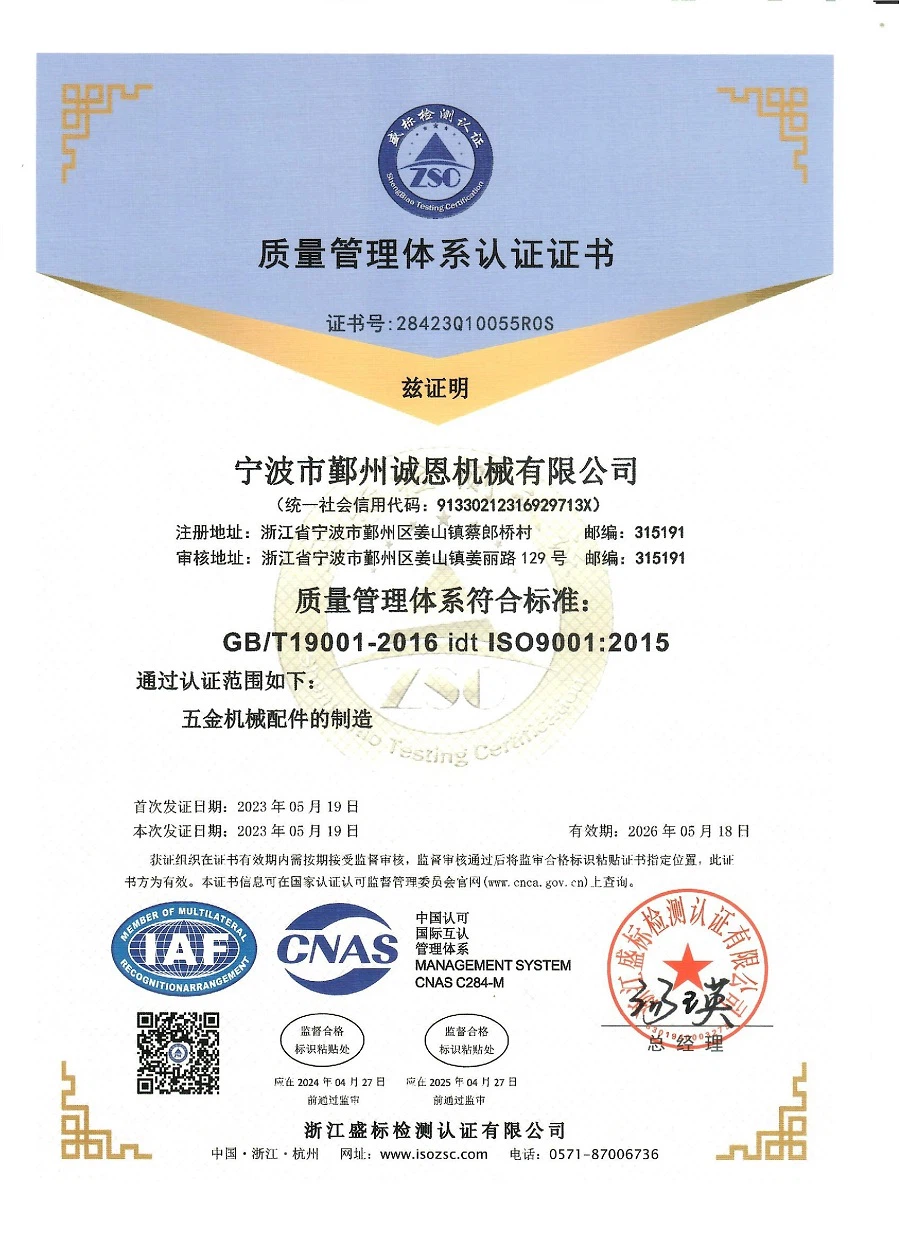
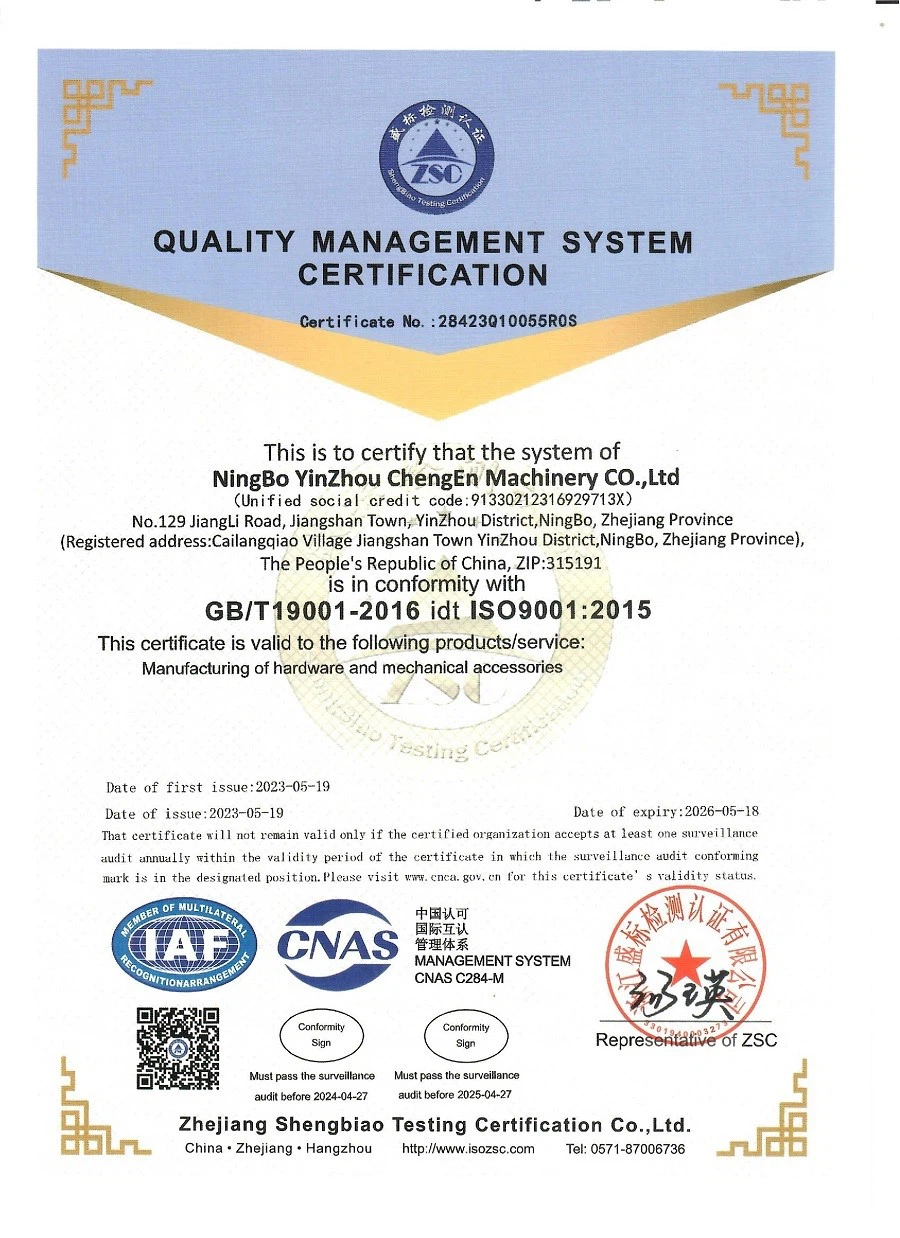
Growing up from a small workshop, CEN machining Factory was established in 2007.In 2015 we upgraded to a limited company(Ningbo Chengen Machinery Co.,Ltd.) .In 2022,we purchased a new plant and then moved to current address:NO.129 RD JIANGLI,JIANGSHAN TOWN,YINZHOU DISTRICT,NINGBO.
Our factory covers an area of around 5,500 square metres and we have over 50 front-line workers.We have many advanced machinery equipments


Certifications
FAQ
Q: How often do you need a handrail bracket?
Q: What is the best material for handrail brackets?
Q: What is a handrail bracket used for?
Q: Are all handrail brackets the same size?
Q: What is the height of a handrail bracket?
Q: How do you measure a handrail bracket?
Q: How far apart should handrail brackets be?
Q: How do I choose a handrail bracket?
Q: How far should handrail brackets be from the end?
Q: What size screw for handrail bracket?
Q: What are the requirements for handrail brackets?
Q: Where to place handrail brackets?
Q: Do handrail brackets need to be in stud?
Q: What is a handrail bracket?
Q: How often do you need a handrail bracket?
Q: Are all handrail brackets the same size?
Q: Handrail Brackets Care and Maintenance?
Q: Things to Consider Before Buying Handrail Brackets?
As one of the most professional handrail bracket manufacturers and suppliers in China, we're featured by cheap products and good service. Please rest assured to wholesale custom made handrail bracket at competitive price from our factory.
Frameless Glass Spigot Fitting