

Gravity Die Cast
Gravity die casting is a manufacturing process used to produce high-quality metal parts with complex shapes and relatively smooth surfaces. It's a type of casting method that falls under the broader category of die casting processes. The key characteristics differentiating gravity die casting from other casting methods are that (1) only the force of gravity is used to introduce the casting metal into the mold; and (2) a reusable ("permanent") metal mold is used. It is usually made of steel or cast iron.
Benefits of Gravity Die Cast
High-Quality Parts
Gravity die casting produces high-quality aluminum castings with a smooth surface finish and excellent dimensional accuracy. The process involves pouring molten metal into a die cavity, which is made of two steel plates. The cavity is then filled with the molten metal under the force of gravity, resulting in parts with minimal porosity and superior mechanical properties.
Consistent Production
Gravity die casting is a repeatable process that produces aluminum castings with consistent quality. The molds used in the process are made of steel, which makes them durable and long-lasting. This means that the molds can be used to produce thousands of parts with the same level of accuracy and consistency.
Cost-Effective
Gravity die casting is a cost-effective method of producing aluminum castings in large quantities. The initial investment in tooling and equipment may be high, but the cost per part decreases as the volume of production increases. The process also reduces the need for post-processing, which further reduces the cost of production.
Reduced Scrap Rate
Gravity die casting produces less scrap than other casting methods. This is because the process produces aluminum castings with minimal porosity and defects. The high-quality parts produced by gravity die casting require less machining, which further reduces the amount of scrap produced.
Wide Range of Materials
Gravity die casting can be used to produce parts using a wide range of materials, including aluminum, brass, and bronze. The process is particularly well-suited for producing parts with complex geometries that would be difficult or impossible to produce using other methods.
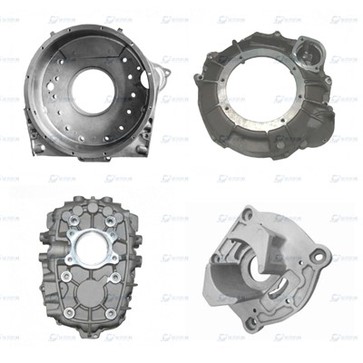


Why Choose Us
Production Capacity
Our factory covers an area of around 5,500㎡ and we have over 50 front-line workers. We have many advanced machinery equipments.
Fast Delivery
Huge production capacity to ensure in time delivery, and transport to the destination in the first time.
Quality Assurance
In terms of quality assurance, the company strictly follows the standards and norms of the industry quality system. Adopt industry-leading testing equipment to ensure product quality and good reputation.
Customer Service
Our clients are our top priority, and we pride ourselves on providing exceptional customer service from start to finish.
Rich Experience
Has a long-standing reputation in the industry, which makes it stand out from its competitors. With over many years of experience, they have developed the skills necessary to meet their clients' needs.
Efficient and Convenient
The company has established marketing networks around the world to provide high-quality services to customers in an efficient and convenient manner.
What Is the Difference Between Gravity Die Casting and Die Casting
Die casting is a general term for casting processes using permanent (reusable) molds. There are several variations of die casting methods, each with its own unique characteristics and applications. Three main types of die casting processes are gravity die casting, low-pressure die casting, and high-pressure die casting.
Gravity die casting involves the use of a preheated and coated reusable metal mold (die). Molten metal is introduced into the die cavity under the influence of gravity alone, allowing it to naturally flow and fill the mold's contours. Gravity die casting is well-suited for creating parts with complex shapes and aesthetic requirements.
Low-pressure die casting is a process in which molten metal is introduced into a mold cavity at low pressure. The mold is typically preheated, and a pressurized furnace or crucible is used to inject the metal into the mold cavity. This method is known for its ability to reduce turbulence and gas entrapment during filling, resulting in improved casting quality. Low-pressure die casting is often chosen for producing parts that require better structural integrity compared to gravity die casting.
High-pressure die casting relies on the use of high pressure to force molten metal into a mold cavity made of steel. The mold usually consists of two halves that are clamped together. The high-pressure injection ensures rapid and efficient filling of the mold. This method is widely employed in various industries such as: automotive, aerospace, industrial machinery, and consumer goods. High-pressure die casting is known for its high production rates, tight tolerances, and the capability to produce large quantities of parts with consistent quality. However, die casting is less suitable for creating structural parts as the process results in poorer mechanical strength compared to gravity die casting.
What Materials Are Suitable for Gravity Die Casting



Steels
While steel can be cast using the gravity die casting process, it's predominantly utilized for creating permanent molds rather than being the casting material itself. Typically, cast iron or steel serves as the mold material due to its durability. Steel's higher melting point compared to common non-ferrous casting materials leads to rapid die wear, making steel die casting generally impractical. However, certain low-alloy steels with relatively lower melting points can be used for gravity die casting applications where specific mechanical properties are required.
Magnesium
Magnesium alloys are well-suited for gravity die casting due to their low density, good strength-to-weight ratio, and excellent machinability. Magnesium castings offer advantages in industries where lightweight components are crucial, such as the aerospace and automotive sectors. However, proper handling and safety precautions are essential due to the flammability of magnesium during melting. To safeguard the molten alloy from oxygen exposure, either a flux or a protective gas cover is essential. This leads to two primary systems for protecting the molten magnesium and its alloys: flux and fluxless methods.
Aluminum Alloys
Aluminum and its alloys are the most commonly used materials for gravity die casting due to their relatively low melting point, good fluidity when molten, and favorable mechanical properties as a finished product. These make it an ideal choice for a wide range of applications. Aluminum gravity castings are found in automotive parts, consumer electronics, and various industrial components. To learn more, see our guide on Aluminum Alloy.
Cast Irons
Cast iron materials, known for their excellent wear resistance, heat resistance, and damping properties, can also be cast using gravity die casting. However, due to their higher melting points and generally more complex casting processes, cast irons are less common in gravity die casting compared to other materials.
Copper Alloys
Copper alloys are suitable for gravity die casting, particularly when parts require good electrical conductivity or thermal properties. Copper's high melting point and greater thermal conductivity can pose challenges during the casting process, but with careful control of the casting parameters, high-quality copper alloy castings can be achieved.
Zinc
Zinc and zinc alloys are widely used in gravity die casting due to their relatively low melting points, excellent casting fluidity, and good natural surface finish they produce. Zinc castings find applications in a number of industries, including: electronics, decorative hardware, and automotive components. The ability to reproduce the fine details of a mold makes zinc a popular choice for decorative items.
Applications of Gravity Die Casting
Gravity die casting finds extensive application across various industries, including automotive, aerospace, marine, electronics, and consumer goods. Common applications include
Automotive Components
Gravity die casting is widely used in the automotive industry to manufacture engine blocks, cylinder heads, transmission housings, brake components, and suspension parts.
Aerospace Parts
Gravity die-cast components play a crucial role in aerospace applications, including aircraft engine components, structural fittings, and landing gear components, where lightweight materials and high mechanical properties are essential.
Electrical and Electronics
Gravity die casting's ability to produce intricate components with excellent surface finishes makes It ideal for electronic enclosures, heat sinks, connectors, and other electronic components.
Lighting Fixtures
Gravity die casting offers designers the flexibility to create intricate lighting fixtures with precise detailing and optimal thermal management, meeting the aesthetic and functional requirements of modern lighting applications.
Marine and Offshore Equipment
Gravity Die Cast components are utilized in marine and offshore applications, including propellers, valve bodies, pump housings, and structural fittings, where corrosion resistance and high mechanical properties are paramount.
Step-by-Step Guide to the Gravity Die Casting Process
Preparing the Die
The initial stage of gravity die casting involves the preparation of the die, which is essentially a high-quality mold typically made from steel or cast iron. The design of the die is important as it affects the shape, surface finish, and dimensional accuracy of the final casting. At CFS Foundry, the dies are designed using advanced CAD software and then precision-engineered to meet the specific requirements of each project. Special attention is given to the thermal characteristics of the die to ensure it can manage the heat effectively during the casting process.
Heating the Die
Before pouring the molten metal, the die is preheated to a specific temperature. This step is critical to ensure the longevity of the die and to prevent premature solidification of the molten metal. Preheating also aids in better metal flow and can reduce porosity and shrinkage in the final product. CFS Foundry carefully monitors and controls the temperature to optimize the casting quality and extend the life of the die.
Pouring the Metal
With the die at the proper temperature, molten metal is carefully poured into the die cavity. The metal is prepared in a separate furnace where it' s heated until it reaches the correct liquid state. The skillful pouring is vital to control the flow rate, which can lead to defects in the casting. Our foundry ensures that the pouring process is conducted under controlled conditions to maximize the integrity of the cast parts.
Cooling and Solidification
Once the molten metal is in the die, gravity pulls it into every crevice and corner of the mold. As the metal cools, it begins to solidify from the outer edges of the die cavity moving inward. Cooling systems can be applied to certain areas of the die to accelerate solidification in those regions, ensuring a consistent cooling rate and minimizing the risk of defects. The time taken for the metal to solidify completely will depend on the complexity and size of the casting as well as the metal used.
Die Opening and Part Removal
After the metal has fully solidified, the die is carefully opened. At CFS Foundry, state-of-the-art machines are employed to open the dies and eject the castings. This is done with precision to avoid damaging the casting or the die. The newly formed component, which now bears the detailed impressions of the die surface, is then removed and inspected briefly before moving to the next stage.
Trimming and Finishing
The final step in the gravity die casting process is the trimming of excess material, which includes the removal of feeders, runners, and any flash that occurred during the casting process. CFS Foundry utilizes both manual and automated methods for trimming to ensure a clean finish. Following this, the cast parts may undergo additional finishing processes such as sanding, grinding, or shot blasting to achieve the desired surface texture. Depending on the client' s specifications, further treatments like painting, powder coating, or anodizing may be applied.

When gravity die casting first came into existence after efforts of many years, manufacturers would make use of this technique to create only simple components rather than complex ones. But, over the years, technology progressed rapidly and the sand cores were introduced in the field of gravity die casting. As of today, manufacturers of different components can create even the most complex parts by making use of the gravity die casting process. However, there are a large number of other methods also which can be used to produce parts on a large scale, and that too, very rapidly. Many manufacturers are adopting those methodologies to serve their purposes of mass production.
Notwithstanding, it is fundamentally less expensive than most other different casting procedures. Although this technique calls for more time, it saves a great deal of money since the infrastructure for gravity die casting costs less. Additionally, this technique is more straightforward than most other casting procedures. So choosing gravity die casting for the large-scale manufacturing of less difficult components is a better decision.
But, it might prove to be a matter of great loss if the manufacturers utilize this technique for an enormous volume of complicated parts creation. If the creation volume is little or medium, the gravity die casting technique is an ideal choice over most other casting procedures.
Gravity Die Casting Market Analysis
The Gravity Die Casting Market size is estimated at USD 25.43 billion in 2024, and is expected to reach USD 30.72 billion by 2029, growing at a CAGR of 3.79% during the forecast period (2024-2029).
Gravity-die casting is one of the oldest methods of die casting. This die-casting process is used to create accurately dimensioned, finely defined, smooth, or textured surface metal parts. The fundamental benefit of gravity die casting is its fast-manufacturing speed. The reusable die tooling enables the production of hundreds of castings per day. High-definition parts reduce machining costs, while higher surface finish saves finishing expenses.
Due to its high thermal conductivity, the electrical and electronics industry is likely to see an increase in demand for aluminum die-casting parts during the forecast period. Die-casting machinery is in high demand as a result of the automotive industry's growing preference for lightweight metals and rising automobile sales.
Over the long term, the market is anticipated to benefit from the development of renewable power generation and the rapid expansion of the consumer electronics, computers, and communication industries.
With the development of new technologies, automotive parts have seen advancement and innovation in recent years. Among them, auto component manufacturing using lightweight materials has received national attention. In addition, automakers are using lightweight non-ferrous metals to reduce the weight of vehicles as a result of CAFE standards and EPA policies to reduce automobile emissions and improve fuel economy. As a result, the former automotive market is witnessing a significant boost from the use of die-cast parts to reduce weight.
Our Factory
Growing up from a small workshop, CEN machining Factory was established in 2007.In 2015 we upgraded to a limited company(Ningbo Chengen Machinery Co.,Ltd.) .In 2022,we purchased a new plant and then moved to current address:NO.129 RD JIANGLI,JIANGSHAN TOWN,YINZHOU DISTRICT,NINGBO.
Our factory covers an area of around 5,500 square metres and we have over 50 front-line workers.We have many advanced machinery equipments


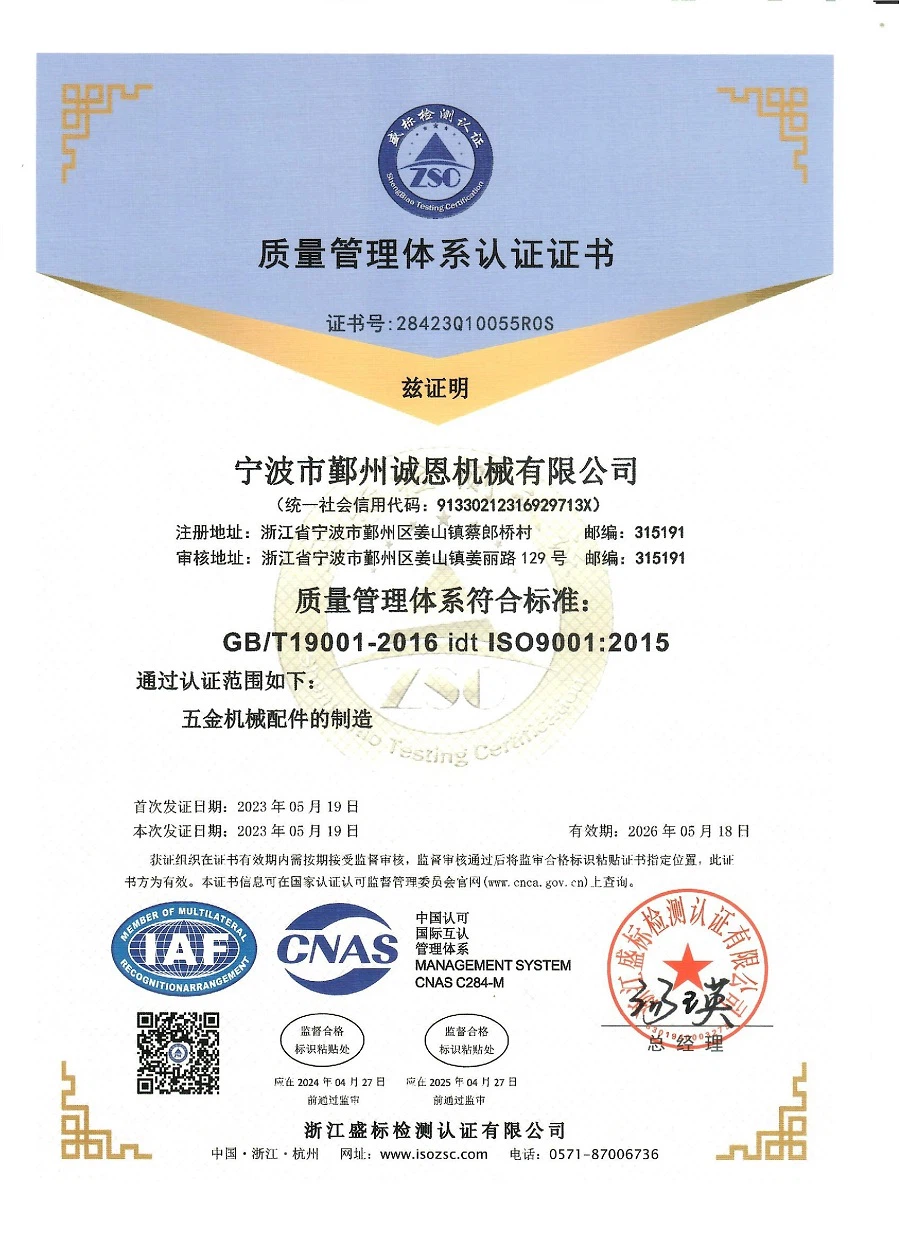
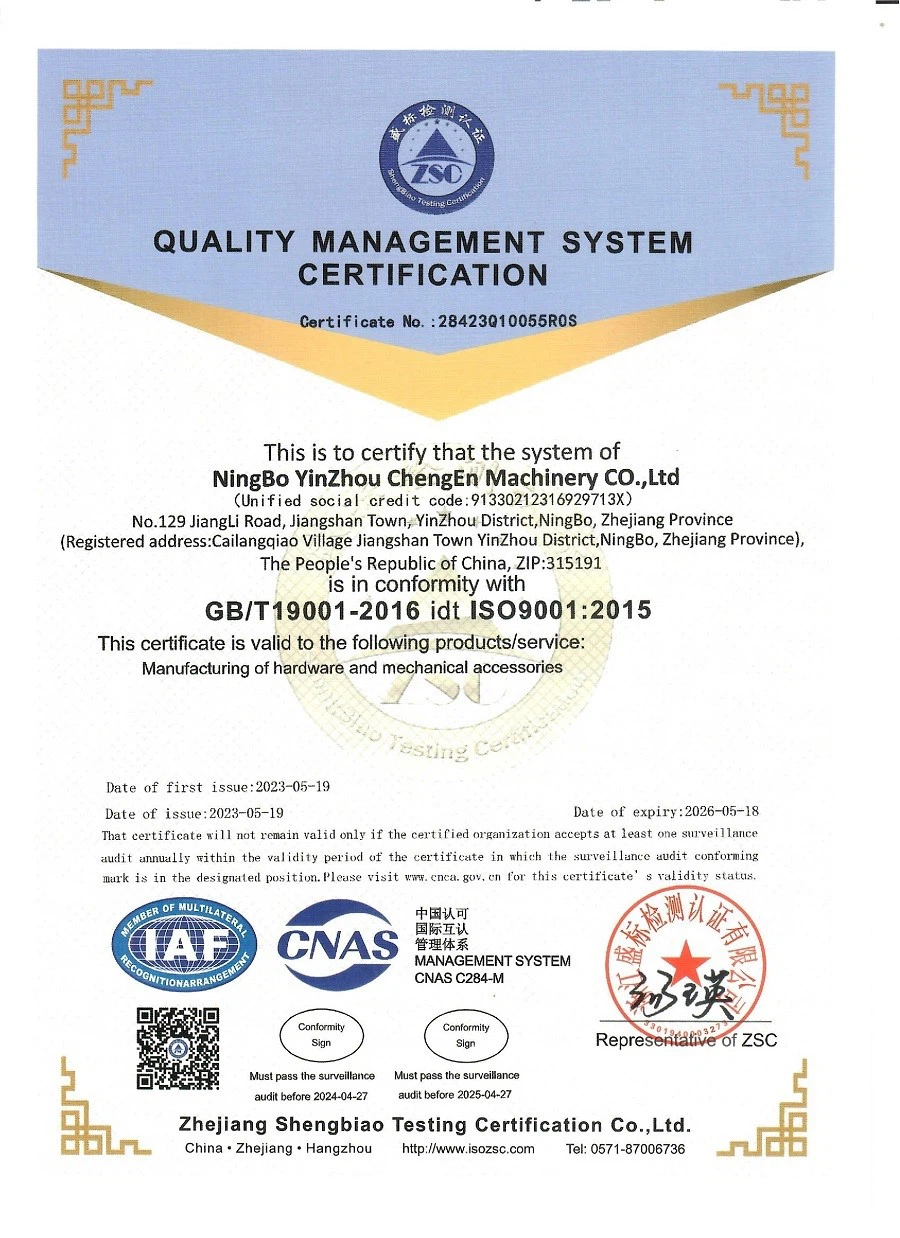
Certifications
FAQ
Q: What is gravity die casting?
Q: What is heat treatment for gravity die castings?
Q: What is the difference between die cast and gravity cast?
Q: What is the draft angle for gravity die casting?
Q: What temperature is gravity die casting?
Q: What is the difference between gravity die casting and pressure die casting?
Q: How does metal enter the mold for gravity die casting?
Q: What is the limitation of gravity die casting?
Q: Where is gravity die casting used?
Q: What is the draft angle for gravity die casting?
Q: Advantages of gravity die casting?
Q: Applications of gravity die casting?
Q: Commonly used materials for gravity die casting?
Q: Gravity die casting process?
Q: Environmental considerations for gravity die casting?
Q: Future trends in gravity die casting?
As one of the most professional gravity die cast manufacturers and suppliers in China, we're featured by cheap products and good service. Please rest assured to wholesale custom made gravity die cast at competitive price from our factory.
Precision Gravity Die Casting parts, 6063 T5 Gravity casting flanges, Gravity Casting Truck Flywheel Housing