

Aluminum Die Casting
Aluminum die casting alloys are lightweight and possess high dimensional stability for complex part geometries and thin walls. Aluminum withstands good corrosion resistance and mechanical properties as well as high thermal and electrical conductivity, making it a good alloy for die casting. Low-density aluminum metals are essential to the die casting industry. The Aluminum Die Casting process retains a durable strength at very high temperatures, requiring the use of cold chamber machines. The molten metal is still contained in an open holding pot which is placed into a furnace, where it is melted to the necessary temperature. The open holding pot is kept separate from the die casting machine and the molten metal is ladled from the pot for each casting because these high temperatures would damage the normal pumping system. The pressure requirements for cold chamber castings are typically higher than those of hot chamber die castings.
Benefits of Aluminum Die Casting
Complex Geometry
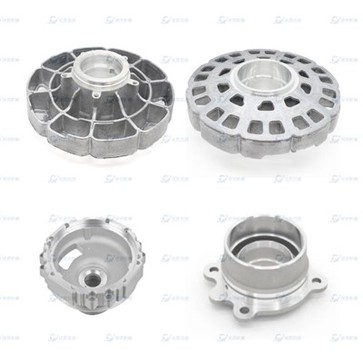
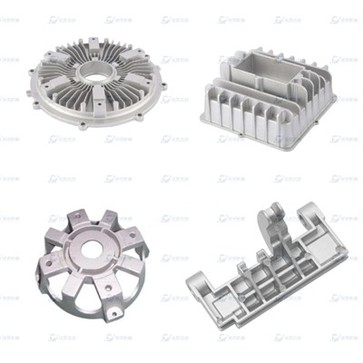
Aluminum die casting allows for the production of intricate and complex shapes with high precision, providing design flexibility that is difficult to achieve with other manufacturing processes.
High Strength-to-Weight Ratio
Aluminum die castings offer excellent strength-to-weight ratios, making them ideal for applications where lightweight yet durable components are required, such as in automotive and aerospace industries.
Cost-Effectiveness
Aluminum is abundant and relatively inexpensive compared to other metals, making aluminum die casting a cost-effective manufacturing solution, especially for mass production runs.
Excellent Thermal Conductivity
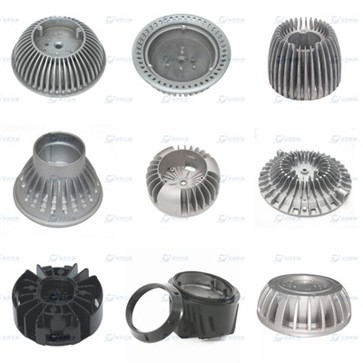
Aluminum's high thermal conductivity allows for efficient heat dissipation, making it suitable for applications requiring thermal management, such as in electronic enclosures and heat sinks.
Corrosion Resistance
Aluminum naturally forms a protective oxide layer when exposed to air, providing inherent corrosion resistance. Additionally, aluminum alloys can be further enhanced with surface treatments or coatings to improve corrosion resistance even further.
Recyclability
Aluminum is highly recyclable, and die castings can be easily melted down and reused without losing their mechanical properties, making aluminum die casting an environmentally friendly option.
Shorter Production Time
Aluminum die casting offers shorter production cycles compared to other manufacturing processes, thanks to its high-speed production capabilities and minimal post-processing requirements.
Tight Tolerances
Aluminum die casting can achieve tight dimensional tolerances, ensuring consistency and precision in the final components.
Reduced Assembly Costs
Aluminum die casting can often consolidate multiple components into a single complex part, reducing assembly time and costs associated with joining multiple parts together.
Design Flexibility
With aluminum die casting, designers have the flexibility to incorporate features such as wall thickness, fine details, and intricate shapes, allowing for innovative and aesthetically pleasing designs.


Why Choose Us
Production Capacity
Our factory covers an area of around 5,500㎡ and we have over 50 front-line workers. We have many advanced machinery equipments.
Fast Delivery
Huge production capacity to ensure in time delivery, and transport to the destination in the first time.
Quality Assurance
In terms of quality assurance, the company strictly follows the standards and norms of the industry quality system. Adopt industry-leading testing equipment to ensure product quality and good reputation.
Customer Service
Our clients are our top priority, and we pride ourselves on providing exceptional customer service from start to finish.
Rich Experience
Has a long-standing reputation in the industry, which makes it stand out from its competitors. With over many years of experience, they have developed the skills necessary to meet their clients' needs.
Efficient and Convenient
The company has established marketing networks around the world to provide high-quality services to customers in an efficient and convenient manner.
What are the Differences between Aluminum Die Casting Versus Other Casting Methods




Process and equipment
Aluminum die casting involves injecting molten aluminum alloy into a steel mold under high pressure. The high pressure helps to fill the mold cavity quickly and achieve high accuracy and detail in the final part. Other casting methods, such as sand casting or investment casting, use molds made of sand or ceramic materials and do not involve high-pressure injection.
Complexity and precision
Die casting excels in producing complex and intricate parts with high precision. The use of reusable molds and the high-pressure injection allow for the creation of fine details, thin walls, and complex geometries. In contrast, other casting methods may have limitations in achieving intricate shapes or maintaining tight tolerances.
Surface finish
Die casting generally results in parts with smooth surfaces and fine details, requiring minimal additional surface finishing. This is due to the high precision of the mold and the high flow rate of the molten metal during the process. In sand casting, for example, the surface finish may be rougher and may require more post-processing to achieve the desired surface quality.
Production volume
Aluminum die casting is well-suited for high-volume production. The process allows for rapid production rates and short cycle times, making it efficient for mass production. Other casting methods, such as investment casting, may be more suitable for lower production volumes due to longer processing times and higher costs associated with mold preparation.
Material selection
Aluminum die casting is specifically used for casting aluminum alloys. These alloys offer a combination of strength, lightweight properties, and good corrosion resistance. Other casting methods, like sand casting, investment casting, or gravity casting, are more versatile and can be used with a wider range of materials, including various metals and even non-metal materials.
Tooling cost
The initial tooling costs for aluminum die casting can be relatively high compared to other casting methods due to the need for steel molds. However, die-cast molds have a long lifespan and can produce a large number of parts, making them cost-effective for high-volume production. Other casting methods may have lower tooling costs but may require more tooling changes or have limitations in terms of part complexity or precision.
Precautions of Aluminum Die Casting
Parting line
As you already know from our previous article, the die casting process involves a die that is usually divided into two halves (although it can be divided into more), one of them mobile and the other static, that come together to form the mold where the molten metal will be injected. The parting line of a die-cast component is the interface where the two halves of the die come together.
Shrinkage
Shrinkage is a very common and unavoidable phenomenon that happens in most castings, and aluminum is no exception. As the molten metal starts to cool down from melting temperature to room temperature, the cast will shrink towards its center.
Draft
In the context of die casting, a draft is a small taper or inclination that can be seen on the sides of the mold that allow for easy ejection. You might have seen this taper in other kinds of molds, such as baking pans for muffins and bread, where the sides have a slight angle instead of being completely vertical.
Wall thickness
A wall design that is too thin could prevent an adequate flow of the molten metal, making the metal solidify before the mold is completely filled. Thin walls can also be susceptible to warping when post-mold machining forces are applied. Excessively thick walls, on the other hand, not only waste casting material, but they increase solidification times, potentially eliminating the fast production cycle advantage of high-pressure die casting.
Fillets and radii
Fillets and radii are curved junctures between two surfaces that would otherwise create a sharp edge. The following image shows an example of a part that incorporates each of these features. The key difference is that fillets exist on the internal edges of the part while radii are found on the external edges.
Bosses
Bosses are protruding features of cast products that are normally used as standoffs or mounting points. This video displays a good visual for what a boss is by showing a boss being added to a doorknob. Including bosses in your design can prevent the need for time-consuming boring operations as a secondary process.
Ribs
Ribs are small bridges of material that can be added between walls to increase their strength without adding too much metal. They also help molten metal to reach every part of the die by increasing the available flow pathways.
Undercuts
Undercuts are known in manufacturing as recessed surfaces that cannot be accessed with a straight tool. The nature of undercuts can prevent die separation and cast ejection after solidification as the die will be essentially ‘‘gripping’’ the cast product, which is why careful design is important.
Applications of Aluminum Die Casting
Automotive Industry
Aluminum die casting is widely used in the automotive industry for manufacturing engine components, transmission parts, and structural components due to its lightweight and durable properties.
Electronics and Appliances
The electronics and appliance sectors benefit from aluminum die casting for producing heat sinks, housing components, and other intricate parts that require efficient heat dissipation.
Industrial Equipment
Aluminum die casting is instrumental in creating parts for industrial equipment, such as pumps, valves, and machinery components, where precision and durability are crucial.
Aluminium Die Casting Process
Aluminium die casting is a complex, multi-step procedure demanding meticulous precision and unwavering control at each juncture. Let's explore its intricacies
Die Preparation
The process commences with die preparation, where the steel die undergoes preheating to temperatures ranging between 150-300°C. A coating of release agent, typically graphite-based spray or plunger lubricant, is meticulously applied to facilitate the seamless ejection of the casting.
Molten Metal Preparation
Aluminium alloy is meticulously melted in a furnace, reaching temperatures spanning from 650°C to 750°C. The molten metal is then meticulously transferred to the shot sleeve of the die casting machine for further processing.
Injection
Within the die casting machine, the molten metal is injected into the die cavity under remarkably high pressures, ranging from 10-175 MPa. This elevated pressure guarantees the complete filling of even the most intricate die geometries, including those with thin walls.
Solidification
As the molten metal engulfs the die cavity, it swiftly cools and solidifies under carefully controlled conditions. Controlled cooling rates, facilitated by die temperature regulation and internal cooling lines, foster the development of a refined, fine-grained microstructure, enhancing the mechanical properties of the casting.
Ejection and Finishing
Upon solidification, the die is opened, and the casting is gracefully ejected with the aid of ejector pins. Subsequently, the casting undergoes meticulous trimming to eliminate any excess material, commonly referred to as flash. Further processing, including machining, surface treatments, or assembly, is undertaken as necessitated by the final product's specifications.
Quality Control
Stringent quality control protocols are implemented throughout the process to guarantee adherence to exacting specifications. Visual inspections, dimensional checks, and sophisticated non-destructive testing techniques, such as X-ray radiography or ultrasonic testing, are deployed to identify and rectify any potential defects, ensuring the utmost quality and integrity of the castings.
Tips to Prevent Porosity in Aluminum Die Casting
Controlling temperature
When it comes to aluminum die casting, controlling the temperature is essential for porosity prevention. At the root of this need is the fact that temperature is the driving factor in the porosity of aluminum die casting.As such, when temperatures are not properly managed, porosity can occur. This is why it is so important to control the temperatures throughout the entire die casting process.
Adjusting lubrication
Proper lubrication helps maintain a consistent temperature, reduce friction, and provide a protective surface to prevent porosity from occurring. Inspecting and replacing lubricants is essential to ensure proper application regularly.
Controlling gas ingress
Semi-soli-die-casting-process-diagramgas can cause porosity in castings, leading to various problems, including causing porosity in aluminum castings.But, with careful consideration, it is possible to reduce the risk of porosity. The key is to ensure that the holding furnace atmosphere is nitrogen-rich and to minimize the oxygen content.
Ensuring proper ventilation
When it comes to aluminum die casting, ensuring proper ventilation is essential for avoiding porosity in aluminum die casting. This is because the air trapped in an aluminum die cast component can cause small holes known as porosity to form.To prevent this, manufacturers can use ejector pins, vents, and other techniques to ensure air exits the component before the molten metal solidifies. Manufacturers should also be aware of their die casting environment, as dust, debris, or moisture can contaminate the molten aluminum and cause porosity.
Adjusting melt quality
Adjusting the melt quality of their aluminum alloy protects parts from porosity. While many strategies are available for preventing porosity in aluminum die casting, understanding the underlying causes of porosity can help identify the right approach for your individual needs.
Monitoring pressure release
When it comes to aluminum die casting porosity prevention, monitoring pressure release is critical. To ensure your parts are free from moisture and voids, it is essential to have a monitoring system in place that can detect any pressure irregularities and alert the operator immediately.
Our Factory
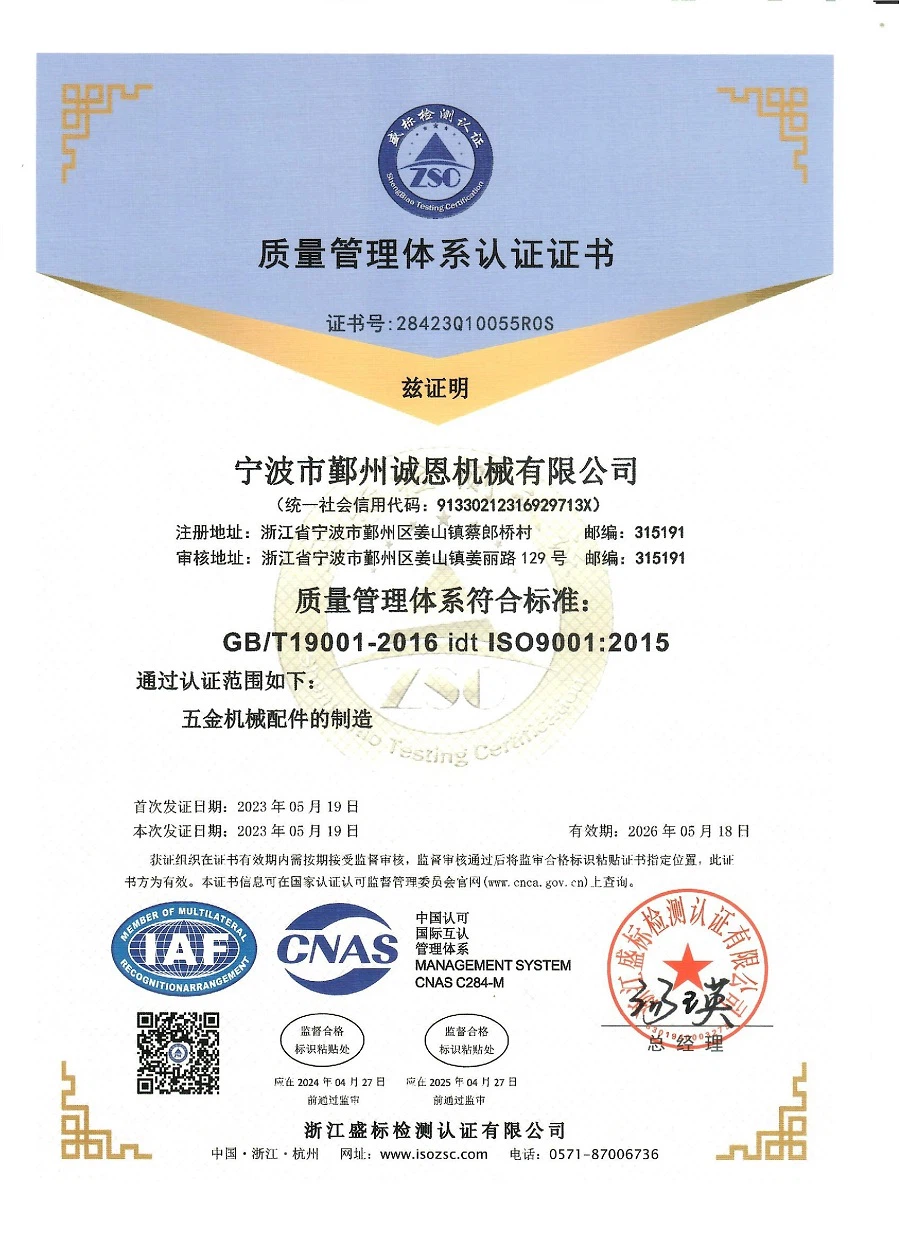
Growing up from a small workshop, CEN machining Factory was established in 2007.In 2015 we upgraded to a limited company(Ningbo Chengen Machinery Co.,Ltd.) .In 2022,we purchased a new plant and then moved to current address:NO.129 RD JIANGLI,JIANGSHAN TOWN,YINZHOU DISTRICT,NINGBO.
Our factory covers an area of around 5,500 square metres and we have over 50 front-line workers.We have many advanced machinery equipments


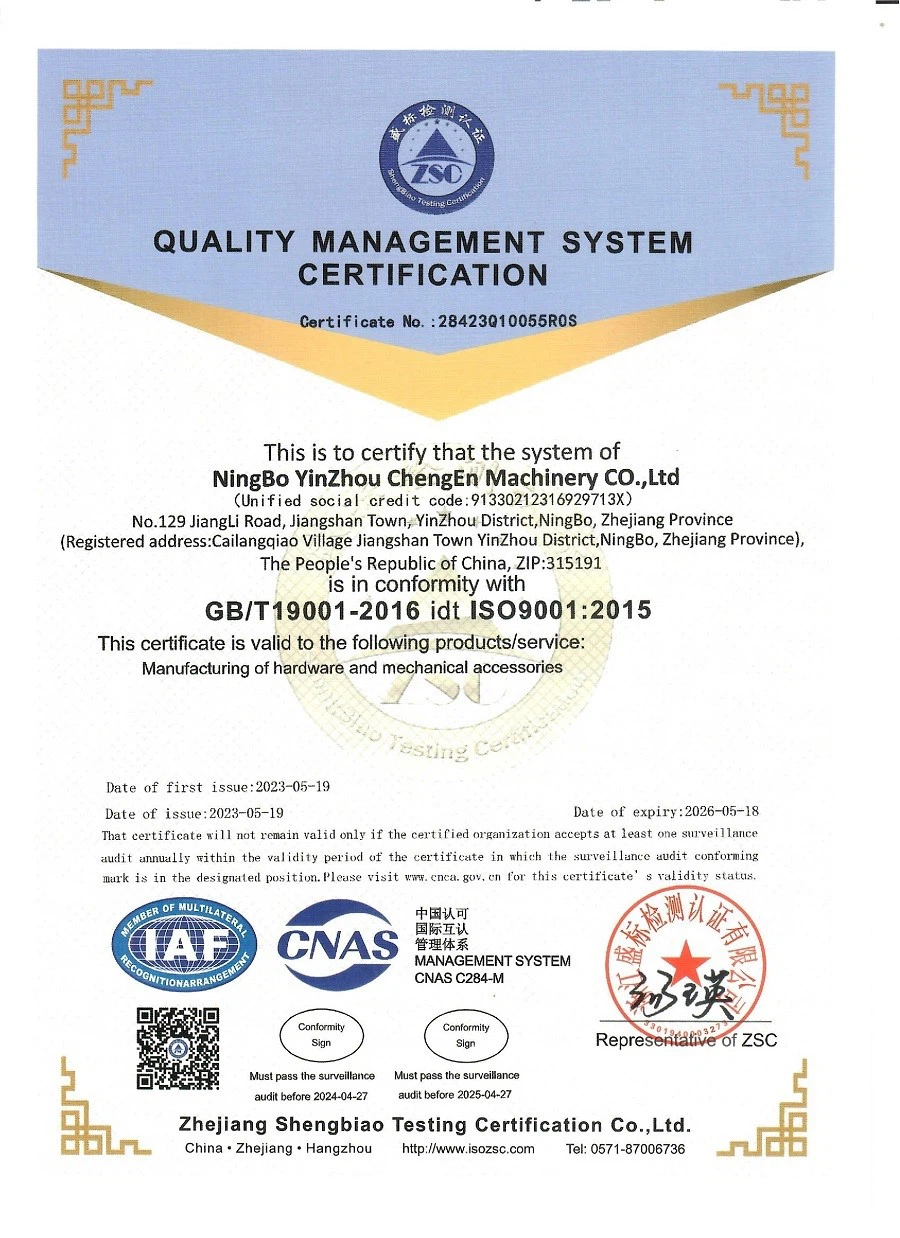
Certifications
FAQ
Q: What are the benefits of die cast aluminium?
Q: Is die cast aluminium cookware good?
Q: How does aluminium casting work?
Q: What is the difference between cast aluminum and die cast aluminum?
Q: What is meant by aluminium die casting?
Q: Does die cast aluminium rust?
Q: What's the difference between aluminum and cast aluminum?
Q: Why die cast aluminum?
Q: Can die cast aluminum be welded?
Q: What is the best casting for aluminum?
Q: How strong is die cast aluminium?
Q: What is the most common die cast aluminum?
Q: Is aluminum die cast safe to use?
Q: Is aluminum casting cheap?
Q: Is aluminum casting strong?
Q: What sand do you use for aluminum casting?
Q: Is die cast aluminum better than aluminum?
Q: What is the minimum thickness for aluminum die casting?
Q: What is the difference between aluminum die casting and extrusion?
Q: What is the difference between forged aluminium and die cast aluminium?
As one of the most professional aluminum die casting manufacturers and suppliers in China, we're featured by cheap products and good service. Please rest assured to wholesale custom made aluminum die casting at competitive price from our factory.
Aluminum ATV wheel hub, Aluminum Die Casting for Furniture Parts, Aluminum die casting flanges