

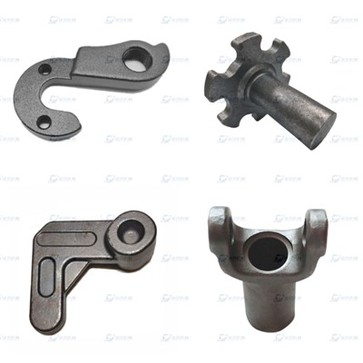
Steel Forging Parts
Steel Forging is a metal forming process working by using a series of forging equipments. Comparing with steel casting, the use of steel forging will refine grain structure, reduce the waste of raw material,avoid complex machining operations and improve the strength of products.
Benefits of Using Forged Steel Parts
Forged steel components offer four key benefits: high strength, precision engineering, improved failure resistance, and uniformity.
High strength
Because of the subtle changes in the grain structure of steel, forged steel components display greater strength, tolerances, and reliability than cast or machined steel parts. Alteration of grain structure occurs as a result of the application of intense pressure and heat during the forging process. This helps to refine and densify steel so that metal displays better tensile strength, and also an enhanced resistance to impacts and scrapes.
Precision engineering
Steel forged parts adhere to very close tolerances. For this reason, they often comprise parts of mechanical assemblies.
Improved failure resistance
The process of creating forged steel helps strengthen the metal, causing forged steel components to display an enhanced ability to withstand sudden metal fatigue and weight-bearing load failures. The heating process during production helps remove internal gas pockets, bubbles and other cooling defects, enabling forged steel components to perform well in high stress or heavy load capacity situations.
Uniformity
A single batch of heated steel often permits the production of a large run of components, which is why forged steel parts often display a high level of uniformity with very limited variations in mechanical properties.




Why Choose Us
Production Capacity
Our factory covers an area of around 5,500㎡ and we have over 50 front-line workers. We have many advanced machinery equipments.
Fast Delivery
Huge production capacity to ensure in time delivery, and transport to the destination in the first time.
Quality Assurance
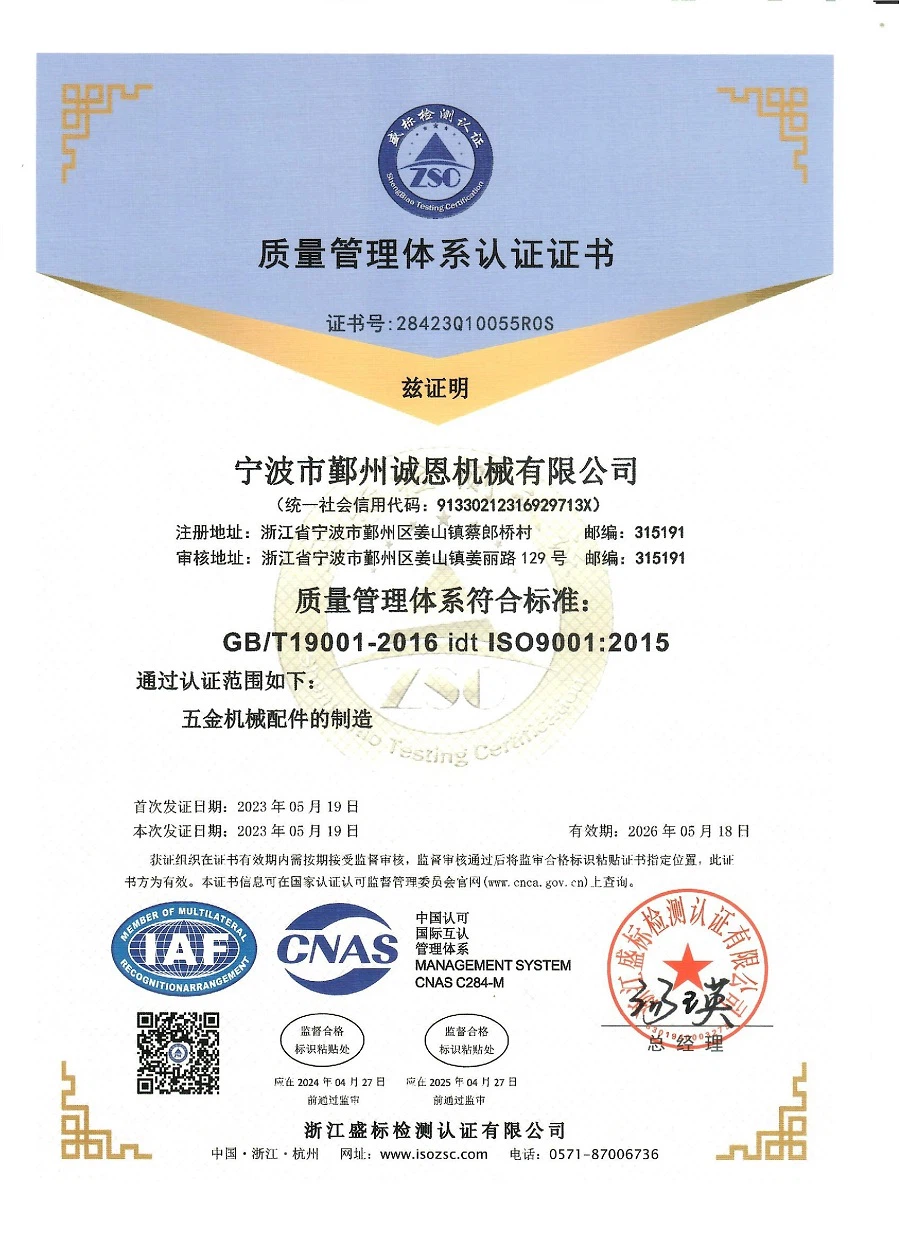
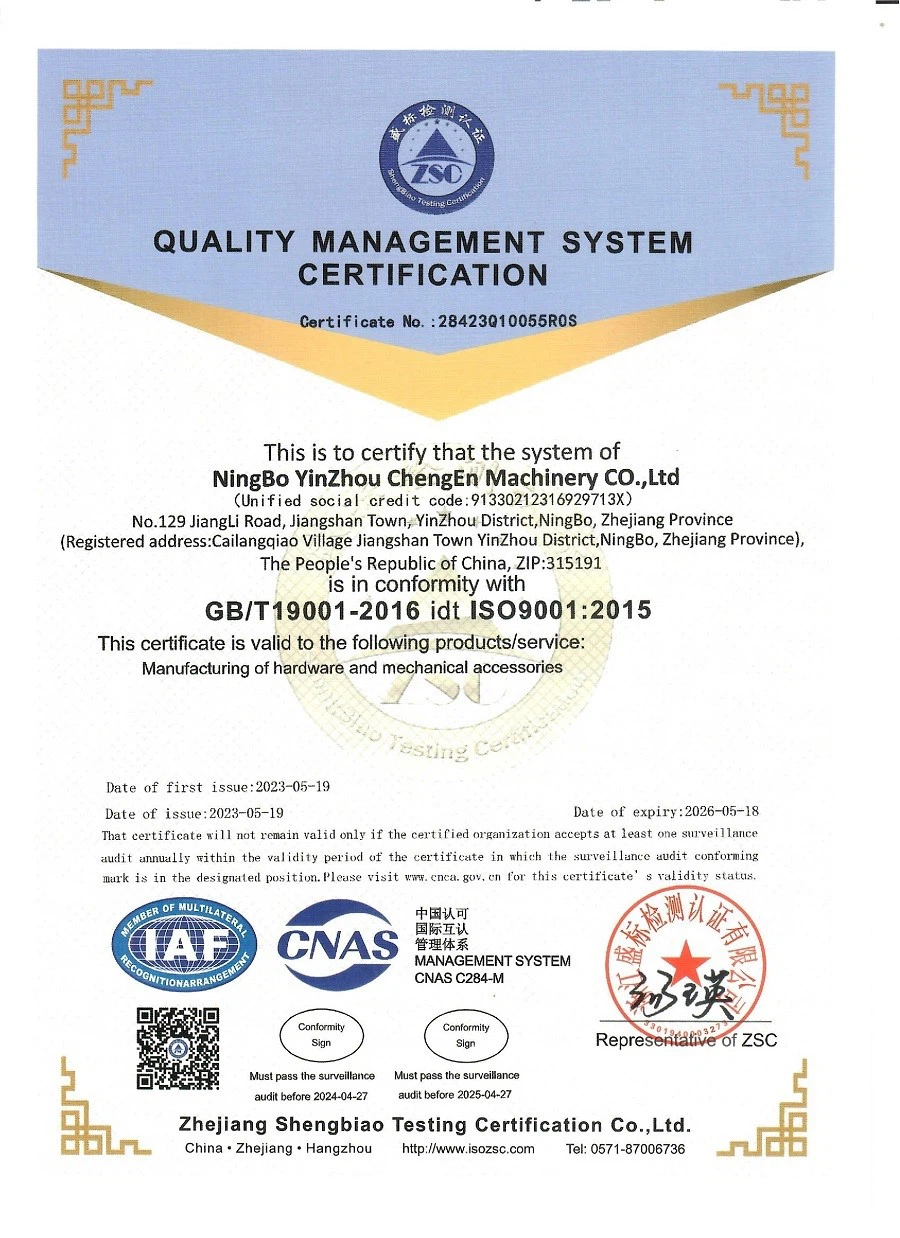
In terms of quality assurance, the company strictly follows the standards and norms of the industry quality system. Adopt industry-leading testing equipment to ensure product quality and good reputation.
Customer Service
Our clients are our top priority, and we pride ourselves on providing exceptional customer service from start to finish.
Rich Experience
Has a long-standing reputation in the industry, which makes it stand out from its competitors. With over many years of experience, they have developed the skills necessary to meet their clients' needs.
Efficient and Convenient
The company has established marketing networks around the world to provide high-quality services to customers in an efficient and convenient manner.
Common Applications of Forgings
Cars and trucks
The strength, reliability and affordability of forged parts make them ideal for critical automotive and truck applications. Forged components are commonly found at impact and stress points such as axles, kingpins, axle beams and axles, torsion bars, ball studs, idler arms, connecting rod arms and steering arms. Another common application is in powertrains, where connecting rods, driveshafts and gears, differential gears, driveshafts, clutch hubs and universal joints are often forged. Although typically forged from carbon or alloy steel, other materials such as aluminum and micro-alloyed steel are making great strides in forging car and truck applications.
Agricultural machinery and equipment
Strength, toughness and economy are also important for farm implements. In addition to engine and transmission components, critical forgings subject to impact and fatigue include everything from gears, shafts, levers and spindles to tie rod ends, rake teeth and cultivator shafts.
Valves, fittings, oilfield applications
Due to their excellent mechanical properties and lack of porosity, forgings are often associated with high-pressure applications in the valve and fitting industries. Flanges, valve bodies and stems, tees, reducing elbows, saddles and other accessories are made of corrosion-resistant and heat-resistant materials. Oilfield applications include rock-cutting drill bits, drilling hardware, and high-pressure valves and accessories.
Hand tools and hardware
Traditionally, forging has been a hallmark of quality in hand tools and hardware. Common examples are pliers, hammers, sleds, wrenches and garden tools, as well as wire rope clamps, sockets, hooks, turnbuckles and eye bolts. Surgical and dental instruments are also often forged. Specialty hardware used in power transmission and distribution lines, such as base caps, pendant clamps, receptacles, and brackets, are often forged for increased strength, reliability, and corrosion resistance.
Off-Highway Equipment/Railway
Forgings find a variety of uses in off-highway and heavy construction equipment, mining equipment and material handling applications due to strength, toughness, machinability and economics. In addition to engine and transmission parts, forgings are used in a variety of gears, sprockets, levers, shafts, spindles, ball joints, hubs, rollers, yokes, axle beams, bearing seats and connecting rods.
General industrial equipment
Large-format forgings are frequently found in industrial equipment and machinery used in the steel, textile, paper, power generation and transmission, chemical and refining industries. Typical forged structures include bars, blanks, blocks, connecting rods, cylinders, discs, elbows, rings, T-pieces, shafts and sleeves.
Ordnance/Shipbuilding
Forged components are found in nearly every defense installation, from rifle triggers to nuclear submarine drive shafts. Heavy tanks, missiles, armored personnel carriers, artillery shells and other heavy artillery are common defense-related applications for forged components.
What Are the Quality Checks for Forgings
Chemical composition inspection general forgings do not carry out chemical composition inspection, chemical composition is based on smelting furnace sampling analysis. But for important or suspicious forgings, some chips can be cut from the forgings and chemical analysis or spectral analysis is used to test the chemical composition.
Appearance size inspection using visual inspection, template or marking method, check forgings surface defects, shape error and size, to determine whether the forgings can be machined.
Macro organization inspection is also known as low times inspection, is to use the naked eye or not more than 10 times the magnifying glass, check the forging surface or section of the macro organization. The main methods are: sulfur printing, hot acid leaching, cold acid leaching and fracture.
Microstructure examination, namely metallographic examination, is to observe, identify and analyze the microstructure state and distribution of forgings under the light microscope, so as to help understand the relationship between microstructure and forgings performance.
Mechanical properties check the general mechanical properties of forgings, including checking hardness, determining strength indicators and plasticity indicators, toughness indicators, etc. For some important forgings, in order to understand the performance under persistent load and the capacity of reciprocating load, endurance, creep and fatigue tests should also be carried out.
Residual stress check In the forging production process, due to uneven deformation, uneven temperature, uneven phase change will cause internal stress, and finally remaining in the forging internal stress is residual stress. When there is too much residual stress inside the forging, the workpiece will be deformed due to the loss of balance of residual stress during machining, which will affect assembly. And in the process of use, because of residual stress and working stress superposition will cause zero failure, so that the whole machine is damaged. Therefore, the technical conditions of some important forgings, such as generator guard rings, stipulate that the residual stress should not exceed 20% of the yield strength.
Heat Treating Processes for Forgings




Normalizing
The most common heat treatment process for forgings is normalizing, which means to austenitize a material and cool it in still air or an equivalent atmosphere. This process is required especially for hot forged parts to counteract the grain growth that occurs during the forging process and helps to equalize the microstructure of parts that have cooled at different rates. Aerospace, automotive, and agricultural forgings often specify normalizing, with some requiring through hardening as an additional thermal processing step.
Through Hardening
Parts manufactured using forging often require high strength to stand up to strong forces in their applications, which makes through hardening an ideal process.
Precipitation Hardening
For forged stainless steel components used in the aerospace and medical industries, precipitation hardening can be used to lend the desirable characteristics in the finished parts. Precipitation hardening is also used on nonferrous forgings made from aluminum and titanium. We typically see precipitation hardening used for more expensive parts that require enhanced properties.
Annealing
If forgings require additional machining to create finished parts, the print will often specify annealing to make the material more amenable to machining.
Carburizing/Case Hardening
Forgings used in wear applications are often carburized (a case hardening process) to create a softer, more ductile core that will not cause the part to break when it is engaged in the application.
How Do Forgings Compare to Castings
Forgings are stronger. Castings do not have strengthening benefits yielded by hot and cold forgings. Forging surpasses casting in predictable strength properties and produces superior simultaneously more ductile and resistant pieces with uniform quality assured across the production run.
Forging refines defects from cast ingots or continuous cast bar. A casting is defined as having neither grain flow nor directional strength and the casting process cannot prevent the formation of certain metallurgical defects. Pre-working forge stock produces a grain flow oriented in directions requiring maximum strength. Dendritic structures, alloy segregations, and similar imperfections are also refined in forging.
Forgings are consistently more reliable and often less costly over time compared to castings. Casting defects occur in a variety of forms. Because hot working refines grain patterns and imparts high strength, ductility, and resistance to each forged piece they are also more durable. Also, they are manufactured without the added costs for tighter process controls and inspections that are required for castings.
Forgings also offer a better response to heat treatment. Castings require close control of melting and cooling processes because alloy segregation may occur. This results in a non-uniform heat treatment response that can affect the straightness of finished parts. Forgings respond more predictably to heat treatment and offer better dimensional stability.
Production of forgings allows for flexible, cost-effective adaption to market demand. Some castings, such as special performance castings, require expensive materials and process controls, and longer lead times. Open-die and ring rolling are examples of forging processes that adapt to various production run lengths and enable shortened lead times.
Forged Components Specification Table
|
Production Process |
Impression Die Forging. Cold Forging. Open Die Forging.Seamless Rolled Ring Forging. |
|
Drawing Format |
PDF, DWG, STP, STEP, IGS, Etc |
|
Material |
Aluminum, Steel, Stainless Steel, Brass, Copper Forged Component Manufacturer |
|
Tolerance |
General tolerance ± 0.2 mm, The min tolerance is ± 0.005mm |
|
Surface roughness |
Min Ra0.2μm |
|
Internal Angle Radian |
0.05 mm |
|
Packing |
EPE foam/ Anti-Rust Paper/ Stretch Film/ Plastic bag +Carton |
|
Finish |
As Machined, Sandblasting, Anodized, Zinc Plated, Black Oxide, Brushed, Polished, PVD |

Machining is the process of removing excess material and achieving exact dimensions as per the requirements. The process of machining converts the steel forged part into a fully finished and ready-to assemble component.
Here our machining service can be seperated into two parts, one is Rough Machining, and the other is Precison Machining.
Rough machining mainly means some simple machining works done by machining equipments like drilling machine, milling machine, nc lathes, and some other small machining equipments.
For more accurate tolerances, precision machining will be required by CNC, which will charge you high machining cost for the high equipment cost and labour cost. So our in-house machining service includes: turning, milling, roll threading, cut threading, grinding, and die manufacturing.
What Are Steel Forging Parts the Categories
Cold Steel Forgings
Due to the forming energy, the forging temperature self-heats to a maximum of 150 degrees Celsius. Low formability and large forming forces are the outcomes when this process is used.
Warm Steel Forgings
The temperature during forging ranges from 750 to 950 degrees Celsius. Limited formability and more forming forces are needed compared to hot forging.
Hot Steel Forgings
The forging temperature is higher than the recrystallization temperature. It is between 950 and 1250 degrees Celsius. Moreover, this category produces good formability and calls for little power when being formed.
Our Factory
Growing up from a small workshop, CEN machining Factory was established in 2007.In 2015 we upgraded to a limited company(Ningbo Chengen Machinery Co.,Ltd.) .In 2022,we purchased a new plant and then moved to current address:NO.129 RD JIANGLI,JIANGSHAN TOWN,YINZHOU DISTRICT,NINGBO.
Our factory covers an area of around 5,500 square metres and we have over 50 front-line workers.We have many advanced machinery equipments


Certifications
FAQ
Q: What are the design considerations for forgings?
Q: In which forged parts are dimensionally accurate and good finish?
Q: How does the microstructure of a forging affect its performance?
Q: What are the mechanical properties of forgings?
Q: How to ensure the quality of forgings?
Q: What is the role of heat treatment in forgings?
Q: What are the safety precautions in forging manufacturing?
Q: How to inspect the quality of forgings?
Q: What are the economic benefits of forging manufacturing?
Q: What are the performance requirements of forgings in specific applications?
Q: What is the classification of forging?
Q: How are forged parts made?
Q: What are the methods of forging manufacturing?
Q: Can forged parts be machined?
Q: Why are forged parts stronger?
Q: Are there size limitations for forged parts?
Q: Are forged parts cost-effective?
Q: What are the commonly used materials for forged parts?
Q: What is the process of forming forging?
Q: What are the methods of forging manufacturing?
As one of the most professional steel forging parts manufacturers and suppliers in China, we're featured by cheap products and good service. Please rest assured to wholesale custom made steel forging parts at competitive price from our factory.
Closed Die Precision Forged Transmission Shaft, Closed Die Forging steel Quick Joint, Precision Forging Rivet Nut