

CNC Turning Parts
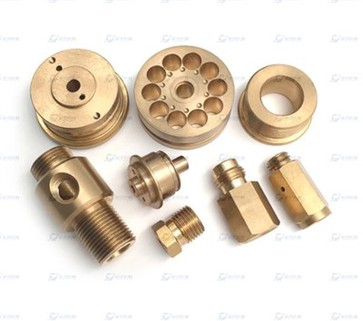
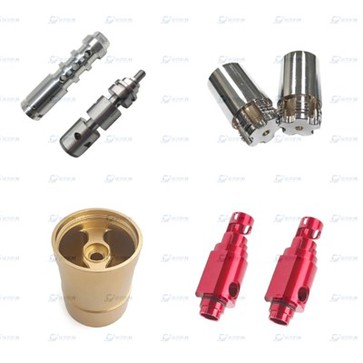
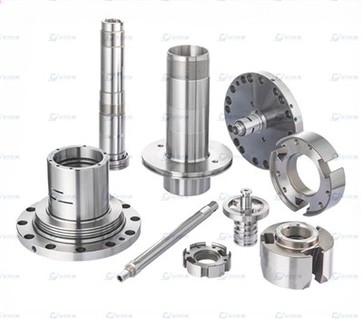
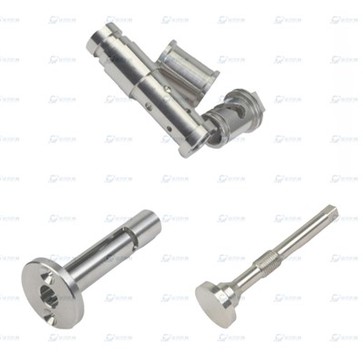
CNC Turning Parts are a kind of parts that use a lathe to process the product, and use our different motion orbit such as: rotary motion and linear motion of the tool or curved motion to change the shape and size of the part.It is worth noting that the cutting process in turning is mainly provided by our workpiece rather than the tool.The most basic and common machining method is turning,and it plays a important role in our machining field.
Benefits of CNC Turning Parts
Precision hight
CNC turning machines are computer-controlled, which ensures precise execution of designs. They can make small and delicate parts that can withstand harsh environments, and each part will be of the same high quality. Additionally, CNC turning machines ensure that each part complies with the required measurements, specifications, and tolerances.
Boosts efficiency
CNC turning machines are much faster and accurate than manually operated tools. This makes the production process much more efficient in terms of time and cost. It is also easier to make adjustments when using the machines, and they can produce a massive amount of parts in a short period.
Cost-effective
The use of CNC turning machines for mass production can save a lot of money. Although the initial investment is high, in the long run, it can save money because it eliminates manual errors and reduces the need for human labor. Additionally, CNC turning machines are durable and require minimal maintenance.
Flexibility
CNC turning machines can produce a wide range of parts that meet different design and shape requirements, making it a flexible solution. A single CNC turning machine can be programmed to create numerous parts ranging from simple geometric shapes to complex designs, making it ideal for mass production.


Why Choose Us
Production Capacity
Our factory covers an area of around 5,500㎡ and we have over 50 front-line workers. We have many advanced machinery equipments.
Fast Delivery
Huge production capacity to ensure in time delivery, and transport to the destination in the first time.
Quality Assurance
In terms of quality assurance, the company strictly follows the standards and norms of the industry quality system. Adopt industry-leading testing equipment to ensure product quality and good reputation.
Customer Service
Our clients are our top priority, and we pride ourselves on providing exceptional customer service from start to finish.
Rich Experience
Has a long-standing reputation in the industry, which makes it stand out from its competitors. With over many years of experience, they have developed the skills necessary to meet their clients' needs.
Efficient and Convenient
The company has established marketing networks around the world to provide high-quality services to customers in an efficient and convenient manner.
Types of CNC Turning Parts

Shafts
Shafts are cylindrical rods that are used to transmit power and motion between different components in a machine. They are commonly used in the automotive industry for engines, transmission systems, and axles. CNC turned shafts are made from a variety of materials, including steel, aluminum, brass, and plastic. Shafts can come in various shapes and sizes, depending on their intended application. For example, a crankshaft is a type of shaft that converts the linear motion of a piston into rotational motion.
Bushings
Bushings are cylindrical components that are used to reduce friction between two moving parts. They are commonly used in automotive and industrial applications for bearings, hinges, and pivot points. CNC turned bushings can be made from a variety of materials, including bronze, brass, and steel. Bushings can be designed to fit into a variety of spaces and can have different shapes depending on their intended function. For example, flanged bushings have a flange on one end to provide additional support.


Fittings
Fittings are components that are used to connect and control the flow of fluids in hydraulic and pneumatic systems. They are commonly used in the aerospace, automotive, and industrial industries. CNC turned fittings can be made from a variety of materials, including stainless steel, brass, and aluminum. Fittings can have various designs depending on their intended application. For example, a compression fitting is used to connect two pipes together and is designed to withstand high pressure.
Couplings
Couplings are components that are used to connect two shafts together in order to transmit power. They are commonly used in the automotive and industrial industries for power transmission. CNC turned couplings can be made from a variety of materials, including steel, aluminum, and brass. Couplings can come in different shapes and sizes depending on their intended application. For example, a flexible coupling is designed to compensate for misalignment between two shafts.

CNC Turned Parts vs. CNC Milled Parts: Distinguishing the Differences
Manufacturers and designers often struggle when deciding whether to use CNC milling or CNC turning to achieve production of parts due to the high precision of their computerized processes. However, understanding the differences between the two machine processes, including their limitations, can help quickly identify and select the best machine process for each project. The movement of components and tools is a notable difference between them. The material moves in CNC turned parts, while the cutting tool is held stationary by a clamping mechanism. While the material is in place, the cutting tool travels according to the computer-generated CNC milling manufacturing strokes.
CNC milling may be better suited for larger pieces of material than CNC turning, as larger materials may be difficult to turn. Additionally, the complexity of the design may be another important consideration in choosing one of the two CNC-based programs. CNC milling methods are generally better suited for complex designs that require a large number of operations, as the cutting tool can easily move along the material. Meanwhile, CNC turning is particularly well suited for round materials. Therefore, CNC milling is often used to produce parts with complex geometries, such as gears.
They are also sometimes used together to complete custom designs, with a focus on factors such as precision, measurement, and shape complexity.
The decision to use CNC turning or milling often depends on the complexity of the part and the material used. For example, CNC turning is often used for cylindrical or round items, while CNC milling is better suited for parts with complex geometries, such as gears or brackets.
Applications of CNC Turning Parts
Automotive industry
CNC turning parts are extensively used in the automotive industry. From engine components to suspension systems, CNC turning ensures the production of parts that meet the industry's stringent requirements for tolerance, durability, and performance. The ability to produce complex shapes and intricate designs has revolutionized automotive manufacturing processes.
Medical equipment manufacturing
CNC turning plays a crucial role in producing components for medical equipment. From surgical tools to prosthetics, CNC turning ensures the production of precision parts that adhere to strict quality and sterilization standards. The ability to produce custom-designed components has significantly contributed to advancements in medical technology.
Electronics and telecommunications
The electronics and telecommunications industries rely on CNC turning for the production of connectors, couplings, and other small components. The accuracy and repeatability of CNC turning enable the production of these components with intricate designs and precise dimensions, ensuring reliable connections and optimal performance.
Energy sector
CNC turning is widely used in the energy sector, particularly in the production of parts for turbines, windmills, and power generation equipment. CNC turning provides the necessary precision and efficiency required for high-performance components in this demanding industry.
Industrial machinery
CNC turning finds applications in various industrial machinery, such as pumps, valves, and actuators. These components require precise machining to ensure optimal performance and reliability in industrial processes. CNC turning's ability to produce complex shapes and maintain tight tolerances makes it a preferred choice for manufacturing such parts.
Craftsmanship of CNC Turning Parts
Workpiece mounting
The first step is to mount the workpiece, often referred to as a blank or billet, onto the lathe. The workpiece is typically a cylindrical or rod-shaped material, such as a bar or a pre-formed component. It is secured onto the lathe's chuck or collet, which holds it firmly in place during the machining process.
Tool Selection and setup
Once the workpiece is mounted, the appropriate cutting tools are selected and set up in the lathe's tool turret or toolpost. The cutting tools used in CNC turning include various types of inserts, drills, boring bars, and threading tools. The selection of the tools depends on factors such as the material being machined, the desired shape and dimensions of the part, and the required surface finish.
Programming and setup
Next, the CNC turning machine is programmed with the specific instructions for the machining operation. This programming is typically done using CAD/CAM software or directly at the machine's control panel. The programming includes information about tool paths, cutting speeds, feed rates, and other parameters necessary to achieve the desired shape and dimensions of the part.
Machining operation
Once the programming and setup are complete, the CNC turning process begins. The lathe rotates the workpiece at a controlled speed, while the cutting tool moves along the workpiece's surface, removing material to create the desired shape. The cutting tool can move in various directions, including along the length (longitudinal feed) and across the diameter (cross feed) of the workpiece.
Material Options for CNC Turned Parts
Stainless steel has been a preferred manufacturing material for different purposes, the chief of which is its corrosion resistance. Other attractive properties of stainless steel include its high durability, strength, and thermal properties, which make it suitable for applications where the ability to withstand extreme temperatures is critical. Nevertheless, its aesthetic appeal, which manufacturers seek in materials for decorative purposes, completes why it is attractive to manufacturers as a suitable material for CNC machined parts.
One attractive property of brass is its high machinability making it easy to handle during machining procedures like CNC machining. However, it is endowed with other interesting properties, such as high corrosion resistance, thermal and electrical conductivity, and an appealing appearance, making it suitable for decorative manufacturing. Considering its anti-corrosion and high electrical conductivity, it also applies to plumbing products and electrical components.
Steel' s high tensile strength and durability are two characteristics that make it widely applicable for various CNC machined parts. For instance, in mold design and at the design stage of other projects, designers often specify steel during the material selection stage of the design, given that steel is versatile and can withstand high tensile stresses. Depending on the grade of steel selected, it can also withstand load forces and pressure if heat-treated, making it a suitable material for CNC-turned parts used as machine components and accessories.
Aluminum is one of the few lightweight materials yet significantly strong to comfortably support structural loads and forces. Its anti-corrosion properties make it a suitable material for areas where there is moisture is a challenge. Hence, manufacturers and designers rely on these advantages when recommended as a CNC-machined part.
As the most precious metal on earth, titanium is often recommended for its ability to resist corrosion and retain structural integrity under extreme temperatures and pressure. Also, being lightweight makes it suitable for machined parts used in components in the aerospace industry.
How to maintain CNC Turning Parts
Technology has had a major impact on the production and manufacturing industry over the past few decades. A variety of advancements have allowed production to be more efficient and far safer than ever before. One type of machine that is continuing to provide many benefits to those in the manufacturing industry is a CNC machine. To ensure that your CNC machine continues to operate efficiently, it is important that you follow the proper maintenance schedule.
Keep it clean and lubricated
When it comes to maintaining your CNC machine, the most important thing that you need to do is to keep it clean and lubricated. All CNC machines today work very hard to get the production done that is needed. Similar to any other type of machine, a CNC machine will need to be clean and provided the right type of oil in order to work well. By cleaning the machine daily and replacing lubricants when necessary, you can assure yourself better outcomes.
Follow maintenance schedules
When you get a new CNC machine you will also want to make sure that you follow the right maintenance schedules. A CNC machine will come with a maintenance plan and schedule that is designed to keep the machine running like new. If you are able to follow this schedule, it should keep the machine up and running properly. Also, if you fall behind on the schedule, it could jeopardize your warranty or put you into violation of an equipment lease.
Keep spare parts on hand
While you can follow the maintenance schedule as best as you can, there will come a time in which a certain part will fail. For each CNC machine, there are certain parts that will fail more frequently than others. Because of this, you should make sure that you keep spare parts on hand. This will allow you to make a quick replacement and minimize downtime.
Our Factory
Growing up from a small workshop, CEN machining Factory was established in 2007.In 2015 we upgraded to a limited company(Ningbo Chengen Machinery Co.,Ltd.) .In 2022,we purchased a new plant and then moved to current address:NO.129 RD JIANGLI,JIANGSHAN TOWN,YINZHOU DISTRICT,NINGBO.
Our factory covers an area of around 5,500 square metres and we have over 50 front-line workers.We have many advanced machinery equipments


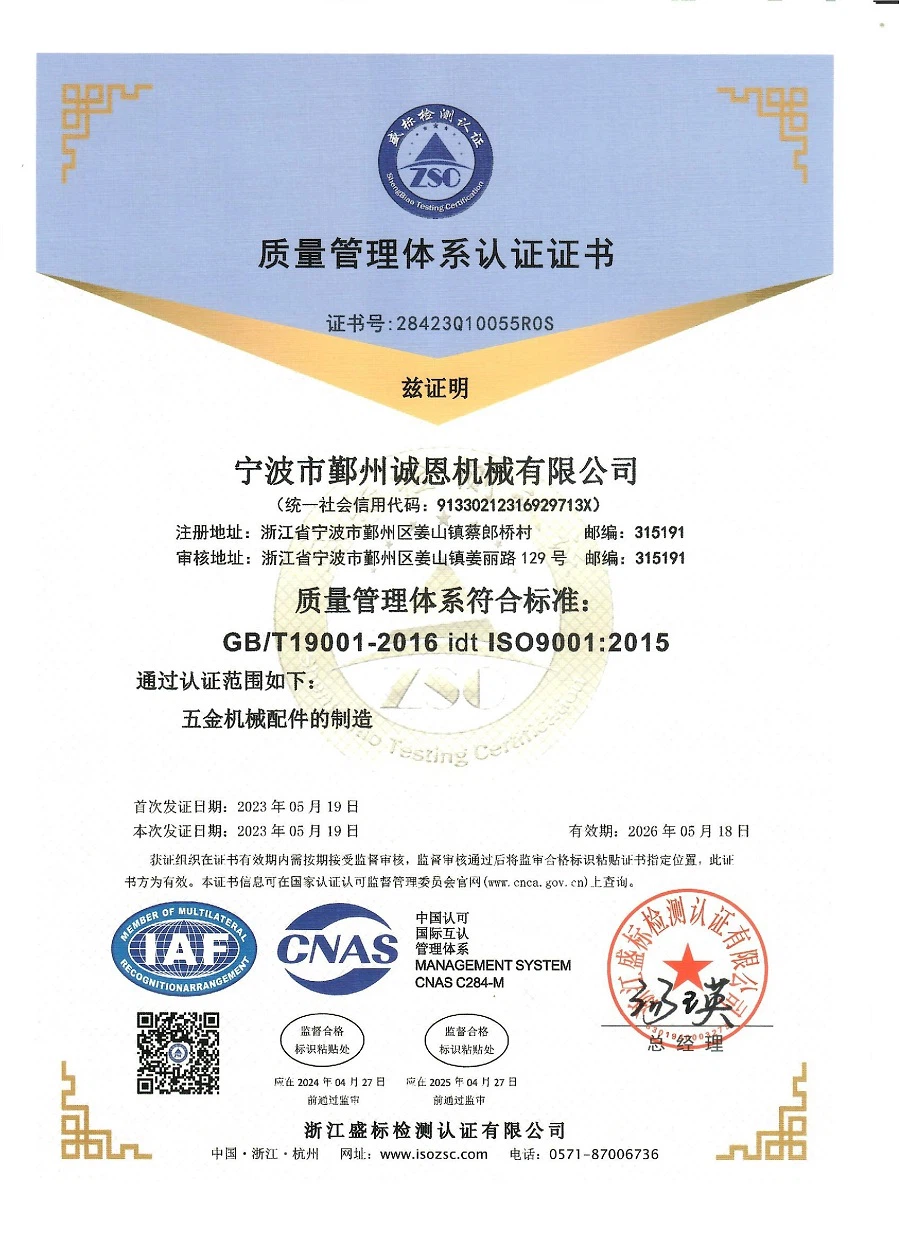
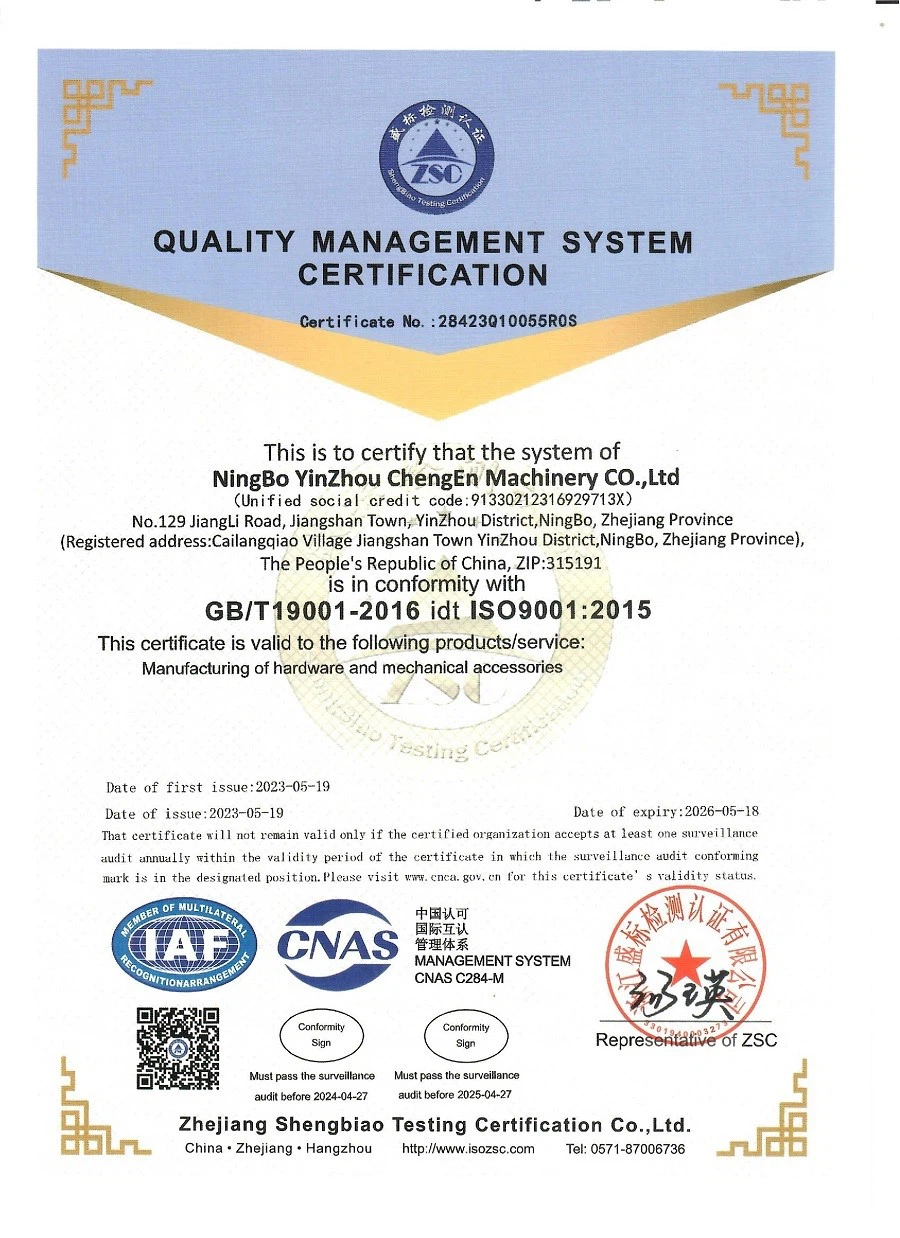
Certifications
FAQ
Q: What are the 3 basic components of CNC?
Q: What is a CNC lathe sometimes called?
Q: How to choose CNC tools?
Q: What are the tool holding devices of CNC turning?
Q: What is the different cutting tool materials used in turning?
Q: How do I choose a turning tool?
Q: What are the common materials that are used in turning?
Q: Is CNC turning or milling?
Q: What is the difference between turning and CNC turning?
Q: Which cutting tool is used in CNC turning machine?
Q: Which tool is most commonly used for turning operations on the CNC lathe?
Q: How do I choose a turning insert?
Q: Is CNC Turning or milling?
Q: What is the primary tool material used for CNC turning?
Q: How do you select turning inserts?
Q: What is the basic knowledge of CNC turning machine?
Q: What is the CNC Turning process?
Q: What is the basic turning process?
Q: What is the most versatile turning tool?
Q: Is turning faster than milling?
As one of the most professional CNC turning parts manufacturers and suppliers in China, we're featured by cheap products and good service. Please rest assured to wholesale custom made CNC turning parts at competitive price from our factory.
Precision CNC Grinding SS316 shafts, 5 Axis CNC machining forging shift fork, CNC Grinding parts for meat mincer