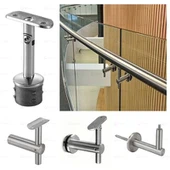
When using wax to make a pattern, investment casting is also called "lost wax casting". Investment casting usually refers to the casting scheme in which the mold is made of fusible material, coated with several layers of refractory material on the surface of the mold to make a mold shell, and then melted the mold out of the shell, so as to obtain a casting mold without a parting surface, and can be filled with sand after high temperature roasting. Because the mold is widely made of waxy materials, investment casting is often referred to as "lost wax casting".
The types of alloys that can be produced by investment casting method are carbon steel, alloy steel, heat-resistant alloy, stainless steel, precision alloy, permanent magnet alloy, bearing alloy, copper alloy, aluminum alloy, titanium alloy and ductile iron.
The shape of investment castings is generally more complex, the minimum diameter of the hole that can be cast on the casting can reach 0.5mm, and the minimum wall thickness of the casting is 0.3mm. In the production, some components that were originally composed of several parts can be designed as integral parts by changing the structure of the parts and directly cast by investment casting, so as to save processing hours and metal material consumption, and make the part structure more reasonable.
The weight of investment castings is mostly zero to tens of cattle (from a few grams to a dozen kilograms, generally no more than 25 kilograms), and it is more troublesome to produce too heavy castings by investment casting.
The investment casting process is more complex, and it is not easy to control, and the materials used and consumed are more expensive, so it is suitable for the production of small parts with complex shapes, high precision requirements, or difficult to perform other processing, such as turbine engine blades.
Introduction To Investment Casting
Jun 09, 2023
Leave a message
You Might Also Like