

Hey there! As a supplier of Aluminum Extrusion Parts, I often get asked, "Can aluminum extrusion parts be welded?" Well, the short answer is yes, they can. But there's a lot more to it than just that simple yes. Let's dive into the details.
The Basics of Aluminum Extrusion Parts
First off, let's quickly go over what aluminum extrusion parts are. Aluminum extrusion is a process where aluminum alloy is forced through a die with a specific cross-sectional profile. This creates parts with a consistent shape along their length. These parts are super versatile and are used in a wide range of industries, from automotive to construction.
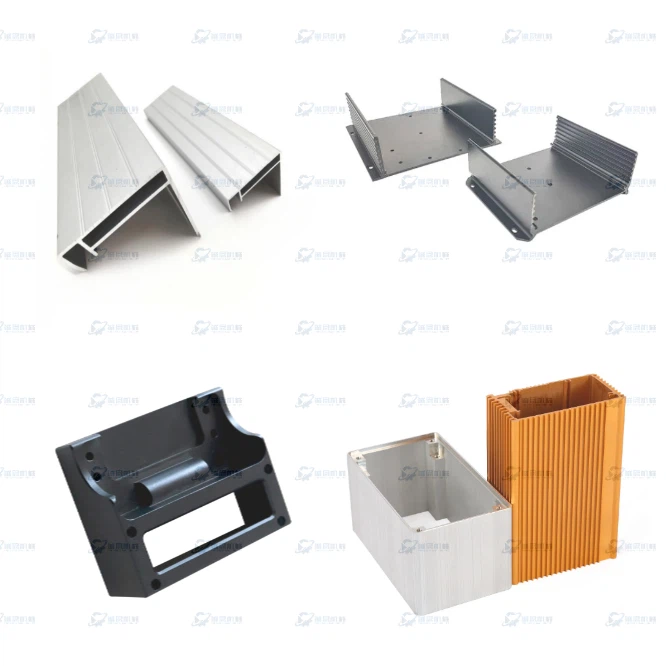
We offer a variety of aluminum extrusion parts, like CNC Machined AL6063-T6 Extrusion Parts, Aluminum Alloy Extrusion Precision Accessories, and Anodized Aluminum Extrusion Parts. Each type has its own unique properties and applications.
Welding Aluminum Extrusion Parts
Now, back to the main question: welding. Aluminum can be welded, but it's a bit trickier than welding other metals like steel. One of the main reasons is that aluminum has a high thermal conductivity. This means it dissipates heat quickly, which can make it difficult to maintain a stable welding arc. Also, aluminum has a thin oxide layer on its surface. This oxide layer has a much higher melting point than the aluminum itself, so it needs to be removed before welding to ensure a good bond.
There are several welding methods that can be used for aluminum extrusion parts.
TIG Welding (Tungsten Inert Gas)
TIG welding is a popular choice for welding aluminum. It uses a non-consumable tungsten electrode to create the weld. The weld area is protected by an inert gas, usually argon, which prevents oxidation. TIG welding allows for precise control over the heat input and the weld pool, resulting in high-quality welds. It's great for thin aluminum extrusion parts and for applications where a clean, aesthetically pleasing weld is required.
MIG Welding (Metal Inert Gas)
MIG welding is another option. It uses a consumable wire electrode that is fed through a welding gun. The weld area is also protected by an inert gas. MIG welding is generally faster than TIG welding and is better suited for thicker aluminum parts. However, it can be a bit more difficult to control the heat input, which can lead to issues like distortion.
Laser Welding
Laser welding is a relatively new method for welding aluminum extrusion parts. It uses a high-powered laser beam to melt and fuse the aluminum. Laser welding offers several advantages, such as high precision, minimal heat-affected zone, and the ability to weld complex shapes. However, it's also more expensive and requires specialized equipment.
Factors Affecting Weldability
Several factors can affect the weldability of aluminum extrusion parts.
Alloy Type
Different aluminum alloys have different welding characteristics. Some alloys, like 6061 and 6063, are relatively easy to weld and are commonly used in extrusion applications. Other alloys, such as the 2000 and 7000 series, can be more difficult to weld due to their high strength and the presence of alloying elements like copper and zinc.
Surface Condition
As mentioned earlier, the oxide layer on the surface of aluminum needs to be removed before welding. This can be done by mechanical cleaning, such as wire brushing, or by chemical cleaning. Any contaminants, like oil or grease, also need to be removed to ensure a good weld.
Part Thickness
The thickness of the aluminum extrusion parts can also affect the welding process. Thicker parts require more heat input to achieve a proper weld, which can increase the risk of distortion. Thinner parts, on the other hand, are more prone to burn-through if too much heat is applied.
Pre-Welding and Post-Welding Considerations
Before welding aluminum extrusion parts, it's important to prepare the parts properly. This includes cleaning the surface, removing any burrs or sharp edges, and ensuring that the parts are properly fixtured to prevent movement during welding.
After welding, the parts may need to be heat-treated to relieve any residual stresses and to improve the mechanical properties of the weld. This can involve annealing, solution heat treatment, or aging.
Quality Control
Quality control is crucial when welding aluminum extrusion parts. Non-destructive testing methods, such as X-ray inspection or ultrasonic testing, can be used to detect any internal defects in the weld. Visual inspection can also be used to check the appearance of the weld and to ensure that it meets the required standards.
Applications of Welded Aluminum Extrusion Parts
Welded aluminum extrusion parts are used in a wide range of applications. In the automotive industry, they are used to make frames, body panels, and engine components. In the construction industry, they are used for window frames, door frames, and structural supports. In the aerospace industry, welded aluminum extrusion parts are used to make aircraft frames and components.

Conclusion
So, to sum it up, yes, aluminum extrusion parts can be welded. But it requires the right equipment, the right welding method, and proper preparation and quality control. As a supplier of Aluminum Extrusion Parts, we have the expertise and experience to provide you with high-quality welded parts that meet your specific requirements.
If you're interested in purchasing our aluminum extrusion parts or have any questions about welding or our products, feel free to reach out to us for a purchase negotiation. We're here to help you find the best solutions for your needs.
References
- Metals Handbook: Welding, Brazing, and Soldering. American Society for Metals.
- Aluminum Welding: Principles and Practices. The Aluminum Association.