

Hey there! I'm an industry insider from an aluminum die casting supply business. Today, I'm super excited to walk you through the ins and outs of how aluminum die casting works. It's a fascinating process that's been around for ages and has a huge impact on various industries.
The Basics of Aluminum Die Casting
First things first, let's understand what aluminum die casting is all about. In simple terms, it's a manufacturing process where molten aluminum is forced into a mold cavity under high pressure. This mold, also known as a die, is usually made of steel and is designed to create a specific shape. The result? High - quality, dimensionally accurate parts that can be used in a wide range of applications.
The Process Step by Step
1. Die Preparation
The whole process kicks off with die preparation. The die needs to be in tip - top shape before we start pouring in the molten aluminum. We clean the die thoroughly to remove any debris or residue from previous castings. Then, we apply a lubricant to the die cavity. This lubricant does a couple of important things. It helps the molten aluminum flow smoothly into the die, and it also makes it easier to eject the finished part once the casting is done.
2. Melting the Aluminum
Next up, we've got to melt the aluminum. We use a furnace to heat the aluminum ingots until they turn into a liquid state. The temperature needs to be carefully controlled. Usually, we aim for a temperature between 660°C and 750°C (1220°F and 1382°F). This ensures that the aluminum is in the right consistency to be injected into the die. We also add some alloying elements at this stage to give the aluminum the desired properties, like strength, corrosion resistance, or heat resistance.
3. Injection
Once the aluminum is molten, it's time for the injection phase. We use a machine, called a die - casting machine, to force the molten aluminum into the die cavity. There are two main types of die - casting machines: hot - chamber and cold - chamber machines.
Hot - chamber machines are used for metals with low melting points, like zinc. But for aluminum, we typically use cold - chamber machines. In a cold - chamber machine, the molten aluminum is ladled from the furnace into a shot chamber. Then, a hydraulic or mechanical piston pushes the aluminum into the die at high pressure. The pressure can range from 10 to 175 megapascals (1450 to 25380 psi), depending on the complexity of the part we're making.
4. Cooling and Solidification
After the molten aluminum is injected into the die, it starts to cool and solidify. This is a crucial step because the cooling rate affects the quality of the final part. If the aluminum cools too quickly, it might develop cracks or other defects. On the other hand, if it cools too slowly, the part might have a coarse grain structure, which can reduce its strength.
We use various techniques to control the cooling rate. Sometimes, we use water - cooled channels in the die to speed up the cooling process. Other times, we just let the die cool naturally, depending on the requirements of the part.
5. Ejection
Once the aluminum has solidified, it's time to get the part out of the die. We use ejector pins to push the part out of the die cavity. These pins are built into the die and are controlled by the die - casting machine. After ejection, the part might still have some excess material, like flash (thin layers of aluminum that have squeezed out between the die halves). We use trimming machines to remove this excess material and give the part its final shape.
Applications of Aluminum Die Casting
Aluminum die - cast parts are everywhere! They're used in the automotive industry for things like engine blocks, transmission cases, and wheel hubs. In the electronics industry, you'll find aluminum die - cast parts in smartphones, laptops, and LED lights. Check out our Die Casting Parts for LED Lights for more info on how we cater to this specific market.
The aerospace industry also relies on aluminum die - cast parts because of their high strength - to - weight ratio. And in the consumer goods industry, you can find these parts in everything from kitchen appliances to power tools.
Advantages of Aluminum Die Casting
There are several reasons why aluminum die casting is so popular. First of all, aluminum is a lightweight metal. This makes it ideal for applications where weight is a concern, like in the automotive and aerospace industries.
Secondly, aluminum has excellent corrosion resistance. This means that parts made from aluminum die casting can last a long time, even in harsh environments.
Another advantage is the high dimensional accuracy that we can achieve with aluminum die casting. We can make parts with very tight tolerances, which is crucial for many applications. For example, our Precision Aluminum Die Casting Parts are made to meet the strictest quality standards.
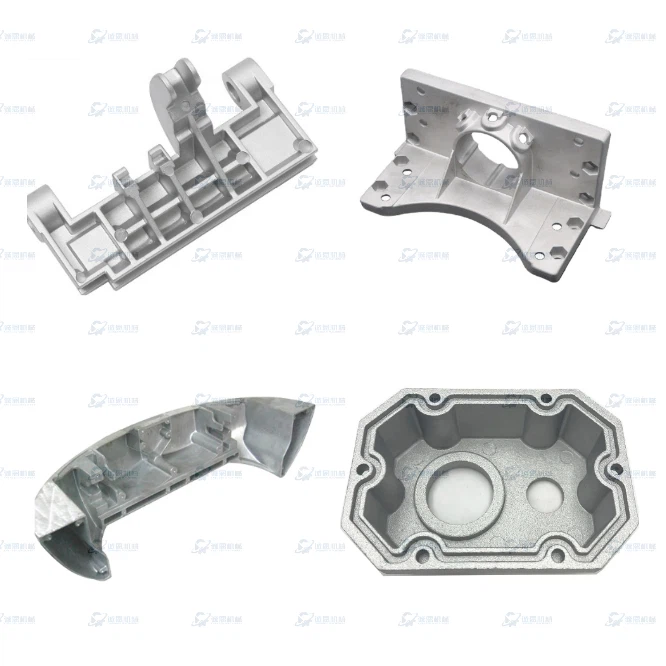

Finally, aluminum die casting is a cost - effective manufacturing process. Once the die is made, we can produce large quantities of parts quickly and efficiently.
Quality Control
Quality control is a big deal in our business. We use a variety of techniques to ensure that every part we produce meets our high standards. We start by inspecting the raw materials. We check the chemical composition of the aluminum to make sure it meets the specifications.
During the casting process, we monitor things like temperature, pressure, and cooling rate. We also use non - destructive testing methods, like X - ray inspection and ultrasonic testing, to detect any internal defects in the parts.
After the parts are finished, we do a final inspection. We measure the dimensions of the parts to make sure they're within the specified tolerances. We also check the surface finish to make sure it's smooth and free of defects.
Specialized Aluminum Alloys
One of the things that makes aluminum die casting so versatile is the ability to use different aluminum alloys. For example, A356 Aluminum Casting is a popular alloy. It has good fluidity, which means it can fill complex die cavities easily. It also has excellent mechanical properties, like high strength and good ductility.
Conclusion
So, there you have it! That's how aluminum die casting works. It's a complex but incredibly useful manufacturing process that has a wide range of applications. Whether you're in the automotive, electronics, aerospace, or consumer goods industry, aluminum die - cast parts can offer you a lot of benefits.
If you're interested in purchasing aluminum die - cast parts for your business, we'd love to talk to you. We have the expertise and the facilities to produce high - quality parts that meet your specific requirements. Just reach out to us, and we can start discussing your project.
References
- "Die Casting: A Practical Guide" by John A. Schey
- "Aluminum Alloys: Structure and Properties" by David A. Porter, William E. Easterling, and Martin Y. Shercliff