

Hey there! As a supplier of CNC turning parts, I've seen firsthand how crucial it is to get the cutting depth right. It can make or break the quality of your parts, and it's something that a lot of folks struggle with. So, in this blog post, I'm gonna share some tips on how to adjust the cutting depth for CNC turning parts.
Understanding Cutting Depth
First things first, let's talk about what cutting depth actually is. In CNC turning, the cutting depth refers to the amount of material that's removed from the workpiece in a single pass of the cutting tool. It's usually measured in millimeters or inches, depending on your preference.
Getting the right cutting depth is super important. If it's too shallow, you'll end up making multiple passes to remove the material, which can increase the machining time and wear out your tool faster. On the other hand, if the cutting depth is too deep, you might overload the tool, cause poor surface finish, or even break the tool.

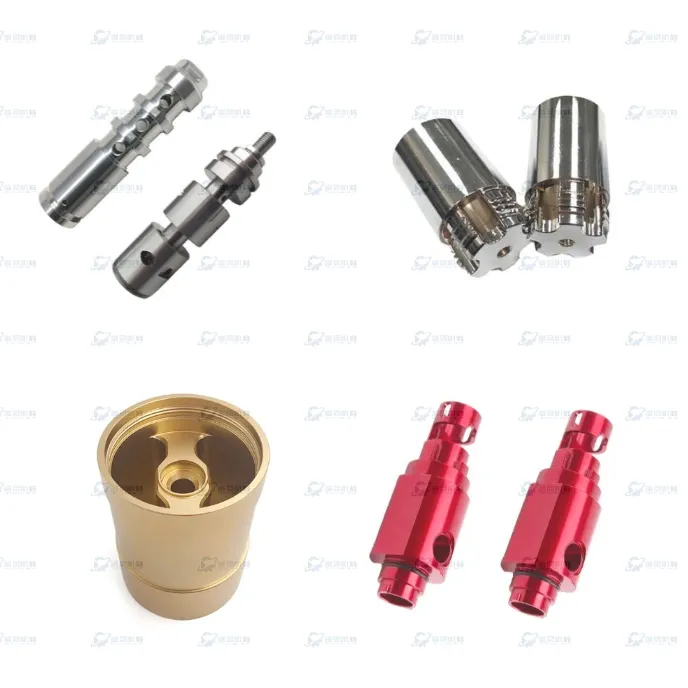
Factors Affecting Cutting Depth
There are several factors that you need to consider when adjusting the cutting depth for CNC turning parts. Let's take a look at some of the most important ones.
Material of the Workpiece
Different materials have different properties, and this can greatly affect the cutting depth. For example, softer materials like aluminum can generally handle a larger cutting depth compared to harder materials like stainless steel or titanium. When working with softer materials, you can often increase the cutting depth to reduce the number of passes and speed up the machining process. However, with harder materials, you'll need to be more conservative with the cutting depth to avoid damaging the tool.
Type of Cutting Tool
The type of cutting tool you're using also plays a big role in determining the cutting depth. Different tools have different geometries and cutting capabilities. For instance, a roughing tool is designed to remove a large amount of material quickly, so it can usually handle a deeper cutting depth compared to a finishing tool. Finishing tools are used to achieve a smooth surface finish, so they typically require a shallower cutting depth.
Machine Capability
Your CNC lathe machine has its own limitations when it comes to cutting depth. You need to make sure that the machine can handle the cutting forces generated by the chosen cutting depth. If the cutting depth is too large for the machine, it can cause vibrations, poor accuracy, and even damage to the machine. Check the machine's specifications and consult the manufacturer's guidelines to determine the maximum cutting depth that the machine can safely handle.
Surface Finish Requirements
If you have strict surface finish requirements for your CNC turning parts, you'll need to adjust the cutting depth accordingly. A shallower cutting depth generally results in a better surface finish because there's less material being removed at once, which reduces the chances of leaving rough marks on the surface. On the other hand, if the surface finish requirements are not as critical, you can increase the cutting depth to improve the machining efficiency.
Steps to Adjust Cutting Depth
Now that you understand the factors affecting cutting depth, let's go through the steps to adjust it for your CNC turning parts.
Step 1: Analyze the Part Design
Start by carefully analyzing the design of the part you're going to machine. Look at the dimensions, tolerances, and surface finish requirements. This will give you an idea of the overall machining strategy and help you determine the appropriate cutting depth.
Step 2: Select the Right Cutting Tool
Based on the material of the workpiece and the machining requirements, choose the appropriate cutting tool. Make sure to consider the tool's geometry, coating, and cutting edge quality. A good quality tool will be able to handle the cutting forces and provide a better surface finish.
Step 3: Determine the Initial Cutting Depth
Refer to the tool manufacturer's recommendations and your past experience to determine an initial cutting depth. As a general rule, for roughing operations, you can start with a relatively large cutting depth, typically around 0.5 to 2 millimeters (or 0.02 to 0.08 inches). For finishing operations, start with a shallower cutting depth, usually around 0.1 to 0.5 millimeters (or 0.004 to 0.02 inches).
Step 4: Set Up the CNC Program
Once you've determined the initial cutting depth, set up the CNC program accordingly. Enter the cutting depth values into the program's toolpath parameters. Make sure to double-check the values to avoid any errors.
Step 5: Conduct a Test Run
Before starting the full production run, it's a good idea to conduct a test run on a scrap piece of material. This will allow you to check the cutting performance, surface finish, and tool wear. Monitor the machine closely during the test run and look for any signs of vibrations, excessive tool wear, or poor surface finish. If you notice any issues, adjust the cutting depth accordingly.
Step 6: Fine-Tune the Cutting Depth
Based on the results of the test run, fine-tune the cutting depth as needed. If the surface finish is too rough, you can reduce the cutting depth. If the machining time is too long, you can try increasing the cutting depth slightly. Keep making small adjustments and running test cuts until you achieve the desired results.
Examples of Adjusting Cutting Depth for Different Parts
Let's take a look at some examples of how to adjust the cutting depth for different types of CNC turning parts.
CNC Grinder Machining Parts
For CNC grinder machining parts, the surface finish requirements are usually quite high. Therefore, you'll need to use a relatively shallow cutting depth for finishing operations. Start with a cutting depth of around 0.1 to 0.2 millimeters (or 0.004 to 0.008 inches) and adjust as needed based on the test run results. For roughing operations, you can use a cutting depth of around 0.5 to 1 millimeter (or 0.02 to 0.04 inches).
CNC Lathe Machine Surface Finish Parts
When machining CNC lathe machine surface finish parts, the key is to achieve a smooth surface finish. Use a finishing tool and start with a cutting depth of around 0.1 to 0.3 millimeters (or 0.004 to 0.012 inches). If the part has a large diameter, you may need to reduce the cutting depth further to avoid vibrations. For roughing operations, a cutting depth of around 1 to 2 millimeters (or 0.04 to 0.08 inches) can be used.
Precision Wire Cutting Parts
Precision wire cutting parts require high accuracy and a good surface finish. Since the wire cutting process is relatively delicate, you'll need to use a very shallow cutting depth. Start with a cutting depth of around 0.05 to 0.1 millimeters (or 0.002 to 0.004 inches) and make small adjustments based on the test results.
Conclusion
Adjusting the cutting depth for CNC turning parts is a critical step in the machining process. By considering the factors affecting cutting depth, following the steps outlined above, and making adjustments based on the specific requirements of your parts, you can achieve high-quality results and improve the efficiency of your machining operations.
If you're in the market for high-quality CNC turning parts, we're here to help. As a trusted supplier of CNC turning parts, we have the expertise and experience to meet your needs. Whether you need CNC Grinder Machining Parts, CNC Lathe Machine Surface Finish Parts, or Precision Wire Cutting Parts, we can provide you with top-notch products at competitive prices. Contact us today to discuss your requirements and start the procurement process.
References
- "CNC Machining Handbook"
- Tool manufacturer's technical documents
- Industry research papers on CNC turning