

Hey there! As a supplier in the aluminum die casting industry, I've had my fair share of experiences dealing with the ins and outs of gating systems. So, I thought I'd share some insights on what the design principles of gating systems for aluminum die casting are.
First off, let's understand what a gating system is. In simple terms, it's the network of channels that allows molten aluminum to flow into the die cavity during the die - casting process. A well - designed gating system is crucial because it directly affects the quality of the final cast part.
Filling Time and Velocity
One of the most important design principles is controlling the filling time and velocity of the molten aluminum. We don't want the metal to flow too fast or too slow. If the filling velocity is too high, it can cause turbulence. Turbulence is a big no - no because it can trap air and oxides in the molten metal. When these are incorporated into the cast part, they can lead to porosity and weak spots. On the other hand, if the filling velocity is too low, the metal might start to solidify before the cavity is completely filled, resulting in incomplete castings.
To achieve the right filling time and velocity, we need to consider the size and shape of the part. For smaller and simpler parts, a relatively higher filling velocity might be acceptable. But for larger and more complex parts, we need to be more cautious. We often use computer - aided simulation tools to predict the filling behavior and adjust the gating system design accordingly.
Pressure Distribution
Another key principle is ensuring uniform pressure distribution within the die cavity. The gating system should be designed in such a way that the molten aluminum exerts an even pressure on all parts of the cavity walls. Uneven pressure can cause the part to warp or have inconsistent wall thickness.
To achieve uniform pressure, we might use multiple gates. By having multiple entry points for the molten metal, we can better control how it spreads out in the cavity. For example, if we have a large flat part, using a single gate in the center might not distribute the pressure evenly. Instead, using multiple gates around the perimeter of the part can help ensure that the metal fills the cavity more uniformly.
Heat Transfer
Heat transfer is also a vital aspect of gating system design. The molten aluminum enters the die cavity at a very high temperature, and it needs to cool and solidify in a controlled manner. The gating system can influence the heat transfer process.
We want to make sure that the metal cools down gradually and evenly. If the gating system allows the metal to cool too quickly in some areas, it can cause shrinkage defects. To manage heat transfer, we can adjust the cross - sectional area of the gates. A smaller cross - sectional area can restrict the flow of metal and slow down the heat transfer rate in that area. This way, we can have more control over the solidification process.
Avoiding Cold Shuts
Cold shuts are a common defect in aluminum die casting. They occur when two streams of molten metal meet and don't fully fuse together. This can happen if the metal is too cold or if the flow pattern is not right.
To avoid cold shuts, the gating system should be designed to promote a smooth and continuous flow of the molten aluminum. We can use rounded corners and smooth transitions in the gating channels. Sharp corners can cause the metal to change direction abruptly, which can lead to the formation of cold shuts.

Gate Location and Size
The location and size of the gates are also critical design factors. The gate location should be chosen based on the part's geometry and the desired filling pattern. For example, if we have a part with a long and thin section, placing the gate at one end of the section can ensure that the metal flows smoothly along its length.
The size of the gate affects the flow rate of the molten aluminum. A larger gate allows more metal to flow in a shorter time, but it can also be more difficult to remove the gate from the finished part. A smaller gate might require a higher filling pressure, but it can be easier to trim off after casting.
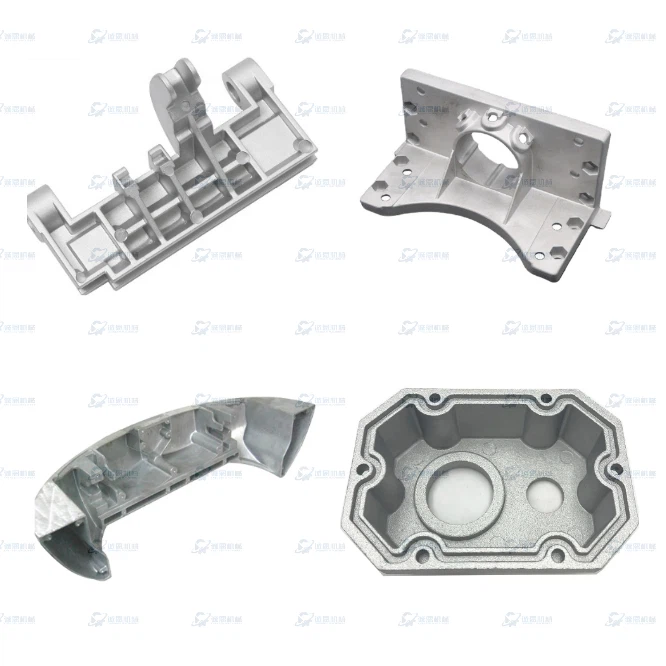
Let me give you some real - world examples of how these design principles play out in our work. We've worked on projects for making Precision Aluminum Die Casting Parts. These parts require high precision and a very low defect rate. By carefully applying the design principles of the gating system, we've been able to produce parts with excellent surface finish and mechanical properties.
We've also been involved in A356 Aluminum Casting. A356 aluminum has its own set of characteristics, and the gating system design needs to be optimized to account for its specific melting and solidification behavior. By focusing on filling time, pressure distribution, and heat transfer, we've been able to achieve high - quality A356 castings.
And for those in the ATV industry, we've done Aluminum Die Casting for ATV Parts. ATV parts often need to be lightweight yet strong. Our gating system design principles help us create parts that meet these requirements, ensuring that the castings are free from defects and have the right mechanical properties.
In conclusion, designing a gating system for aluminum die casting is a complex but essential task. By following the principles of controlling filling time and velocity, ensuring uniform pressure distribution, managing heat transfer, avoiding cold shuts, and carefully choosing gate location and size, we can produce high - quality aluminum die - cast parts.
If you're in the market for aluminum die - cast parts and want to discuss your specific requirements, we'd love to have a chat. Whether it's for precision parts, A356 aluminum castings, or ATV components, we have the expertise and experience to meet your needs. Just reach out, and let's start a conversation about how we can work together to bring your project to life.
References
- Campbell, J. (2003). Castings. Butterworth - Heinemann.
- Flemings, M. C. (1974). Solidification Processing. McGraw - Hill.
- Kalpakjian, S., & Schmid, S. R. (2013). Manufacturing Engineering and Technology. Pearson.