

Hey there! As a supplier of CNC turning parts, I've been in the game for quite a while, and I've seen firsthand how crucial surface flatness is in these parts. It's not just about looks; it directly impacts the functionality and performance of the final product. So, let's dig into the factors that can affect the surface flatness of CNC turning parts.
1. Machine - related Factors
First off, the CNC lathe machine itself plays a huge role. The precision of the machine is key. If the machine has some wear and tear, it can lead to uneven cutting and affect the flatness of the part. For example, if the guide rails of the lathe are worn out, the cutting tool won't move smoothly and precisely along the workpiece. This can result in small bumps or uneven surfaces on the turned part.
Also, the spindle accuracy matters a lot. A spindle with poor run - out can cause the workpiece to rotate in an off - center way. When that happens, the cutting tool will cut at different depths around the circumference of the part, leading to an uneven surface.
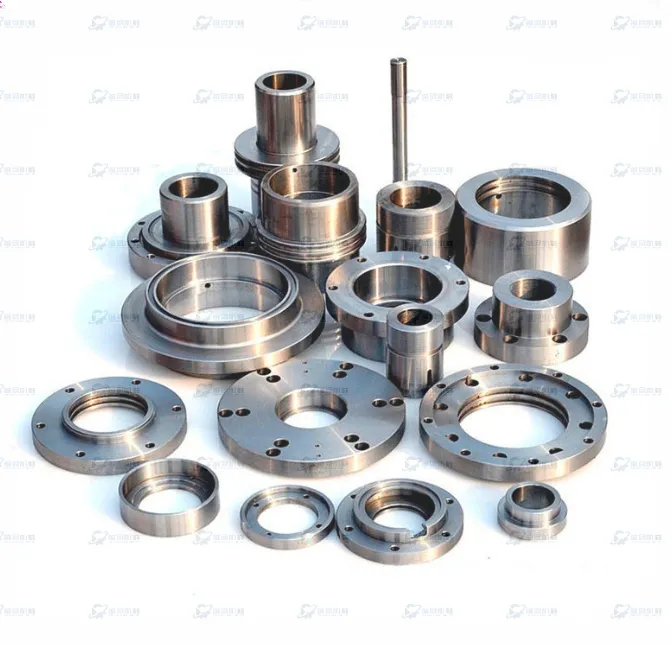
Another thing is the rigidity of the machine. If the machine isn't rigid enough, it can vibrate during the machining process. These vibrations can transfer to the cutting tool and the workpiece, causing chatter marks on the surface. Chatter marks are those wavy or rough patterns that you definitely don't want on your CNC turning parts. Check out our CNC Lathe Machine Surface Finish Parts to see the high - quality results we can achieve with well - maintained machines.
2. Cutting Tool Factors
The cutting tool is like the artist's brush in the world of CNC turning. The geometry of the cutting tool is super important. A tool with the wrong rake angle, clearance angle, or nose radius can lead to poor surface finish and flatness. For instance, if the rake angle is too large, the tool might dig into the workpiece too aggressively, causing excessive material removal and an uneven surface. On the other hand, if the clearance angle is too small, the tool can rub against the workpiece, generating heat and leaving rough marks.
The sharpness of the cutting tool also affects flatness. A dull tool will have a harder time cutting through the material cleanly. It may start to tear the material instead of cutting it, which results in a rough and uneven surface. We need to regularly replace or re - sharpen the cutting tools to ensure consistent and high - quality machining.
The type of cutting tool material is another factor. Different materials are suitable for different types of workpieces. For example, carbide tools are great for cutting hard materials, while high - speed steel tools are often used for softer materials. Using the wrong tool material can lead to excessive wear, poor cutting performance, and ultimately, a bad surface flatness.
3. Workpiece Material Factors
The material of the workpiece itself can have a significant impact on the surface flatness. The hardness and toughness of the material matter. Harder materials can be more difficult to cut, and if the cutting parameters aren't adjusted properly, it can lead to uneven cutting and a rough surface. For example, when machining stainless steel, which is relatively hard, we need to use the right cutting speed, feed rate, and depth of cut to avoid problems like built - up edge (BUE). BUE is when small pieces of the workpiece material stick to the cutting tool, which can cause uneven cutting and a poor surface finish.
The internal structure of the material also plays a role. If the material has inclusions, voids, or uneven grain structure, it can affect how the cutting tool interacts with the workpiece. For example, when cutting through a material with inclusions, the tool may encounter sudden changes in hardness, which can cause it to deflect and create an uneven surface. Check out our CNC Machined SS316L Products to see how we handle challenging materials like SS316L.
4. Cutting Parameters Factors
The cutting parameters, including cutting speed, feed rate, and depth of cut, are like the recipe for a successful CNC turning process. If these parameters are not set correctly, it can mess up the surface flatness.
Cutting speed is the speed at which the cutting tool moves relative to the workpiece. If the cutting speed is too high, it can generate a lot of heat, which can cause the workpiece material to expand and then contract unevenly as it cools. This can lead to thermal distortion and a non - flat surface. On the other hand, if the cutting speed is too low, the tool may not cut through the material efficiently, resulting in a rough surface.
Feed rate is how fast the cutting tool moves along the workpiece. A high feed rate can cause the tool to remove material too quickly, leaving a rough surface. A low feed rate, on the other hand, can be time - consuming and may also cause problems if the tool dwells in one place for too long, leading to over - cutting and an uneven surface.
The depth of cut determines how much material is removed in each pass of the cutting tool. If the depth of cut is too large, it can put too much stress on the tool and the workpiece, causing vibrations and an uneven surface. If it's too small, it may not be an efficient use of time, and it can also lead to problems like the tool rubbing against the workpiece instead of cutting it.
5. Fixturing and Workholding Factors
Proper fixturing and workholding are essential for achieving good surface flatness. If the workpiece isn't held securely in place, it can move or vibrate during the machining process. This movement can cause the cutting tool to cut at different depths or angles, resulting in an uneven surface.
The design of the fixture also matters. A poorly designed fixture may not distribute the clamping force evenly across the workpiece. This can cause the workpiece to deform under the clamping pressure, leading to a non - flat surface after machining.
We need to make sure that the workholding device is clean and free of debris. Any dirt or chips between the workpiece and the fixture can cause the workpiece to sit unevenly, affecting the machining accuracy and surface flatness.
6. Environmental Factors
Believe it or not, the environment where the CNC turning is taking place can also affect the surface flatness. Temperature and humidity can cause the workpiece and the machine components to expand or contract. For example, in a hot environment, the machine parts may expand slightly, which can affect the precision of the machining process. Similarly, high humidity can cause rusting or corrosion on the cutting tools and the workpiece, which can impact the surface finish.
Dust and debris in the air can also be a problem. If dust gets into the machine's moving parts or onto the cutting tool, it can cause abrasion and affect the cutting performance, leading to a poor surface flatness.
Conclusion
In conclusion, there are many factors that can affect the surface flatness of CNC turning parts. From the machine itself to the cutting tool, workpiece material, cutting parameters, fixturing, and the environment, every aspect needs to be carefully considered and controlled. At our company, we take all these factors into account to ensure that we produce high - quality CNC turning parts with excellent surface flatness.

If you're in the market for top - notch CNC turning parts, whether it's CNC Lathe Machine Surface Finish Parts, CNC Grinder Machining Parts, or CNC Machined SS316L Products, we're here to help. We've got the expertise and the experience to meet your needs. Don't hesitate to reach out to us for a purchase discussion.
References
- Boothroyd, G., & Knight, W. A. (2006). Fundamentals of machining and machine tools. CRC press.
- Trent, E. M., & Wright, P. K. (2000). Metal cutting. Butterworth - Heinemann.
- Kalpakjian, S., & Schmid, S. R. (2010). Manufacturing engineering and technology. Pearson.