

Hey there! As a supplier of CNC turning parts, I often get asked about the heat treatment processes for these parts. So, I thought I'd share some insights on this topic in today's blog.
First off, let's understand why heat treatment is so important for CNC turning parts. Heat treatment can significantly enhance the mechanical properties of these parts, such as hardness, strength, toughness, and wear resistance. By carefully controlling the heating and cooling processes, we can tailor the microstructure of the material to meet specific performance requirements.
One of the most common heat treatment processes for CNC turning parts is annealing. Annealing involves heating the part to a specific temperature and then slowly cooling it. This process helps to relieve internal stresses, improve machinability, and refine the grain structure of the material. There are different types of annealing, like full annealing, process annealing, and stress relief annealing. Full annealing is typically used for steels, where the part is heated above the critical temperature and then cooled very slowly in the furnace. Process annealing, on the other hand, is used to soften cold - worked metals and is usually done at a lower temperature. Stress relief annealing is mainly for reducing internal stresses that may have been introduced during machining or welding.
Another important process is quenching. Quenching is a rapid cooling process. The part is heated to a high temperature and then quickly cooled in a quenching medium, such as water, oil, or polymer solutions. This rapid cooling causes the formation of a hard and brittle microstructure, usually martensite in steels. However, quenching can also introduce high internal stresses, which may lead to cracking if not properly managed. That's why tempering is often done after quenching.
Tempering is the process of reheating the quenched part to a lower temperature and then cooling it at a controlled rate. This helps to reduce the brittleness of the quenched part while still maintaining a good level of hardness and strength. The tempering temperature and time are carefully selected based on the desired properties of the part. For example, low - temperature tempering is used to relieve internal stresses and improve toughness without significantly reducing hardness, while high - temperature tempering can result in a more ductile and less hard part.
Normalizing is also a useful heat treatment process. In normalizing, the part is heated to a temperature above the critical range and then cooled in air. This process results in a more uniform grain structure compared to the as - cast or as - forged state. Normalized parts generally have better mechanical properties than non - normalized ones and are often more suitable for further machining or use in applications where consistent performance is required.
Case hardening is a specialized heat treatment process for CNC turning parts, especially those that require a hard surface and a tough core. There are several methods of case hardening, such as carburizing, nitriding, and carbonitriding. Carburizing involves introducing carbon into the surface of the part by heating it in a carbon - rich environment. This forms a high - carbon surface layer, which can be hardened by quenching. Nitriding is the process of introducing nitrogen into the surface of the part, usually at a lower temperature than carburizing. Nitrided parts have excellent wear and corrosion resistance. Carbonitriding combines the features of carburizing and nitriding, introducing both carbon and nitrogen into the surface layer.
Now, let's talk about how these heat treatment processes relate to the different types of CNC turning parts we supply. For CNC Lathe Machine Surface Finish Parts, heat treatment can improve the surface hardness and wear resistance, which is crucial for maintaining a good surface finish over time. The parts used in CNC lathe machines often need to withstand high - speed rotation and contact with workpieces, so proper heat treatment can enhance their durability.
CNC Milling Machine Stainless Steel Parts also benefit greatly from heat treatment. Stainless steel has different grades, and heat treatment can be used to optimize its corrosion resistance, strength, and hardness. For example, some stainless steel grades can be hardened through precipitation hardening, a type of heat treatment that involves heating the part to a specific temperature to form fine precipitates that strengthen the material.
CNC Grinder Machining Parts require high - precision and good surface quality. Heat treatment can improve the dimensional stability of these parts, reducing the risk of distortion during grinding. By carefully controlling the heat treatment process, we can ensure that the parts have the right hardness and toughness to withstand the grinding forces.
When it comes to choosing the right heat treatment process for a particular CNC turning part, several factors need to be considered. The material of the part is the most obvious one. Different metals and alloys respond differently to heat treatment. For example, aluminum alloys have different heat treatment requirements compared to steels. The design and application of the part also play a crucial role. A part that will be subjected to high - stress loads may need a more intensive heat treatment process to achieve the necessary strength and toughness.

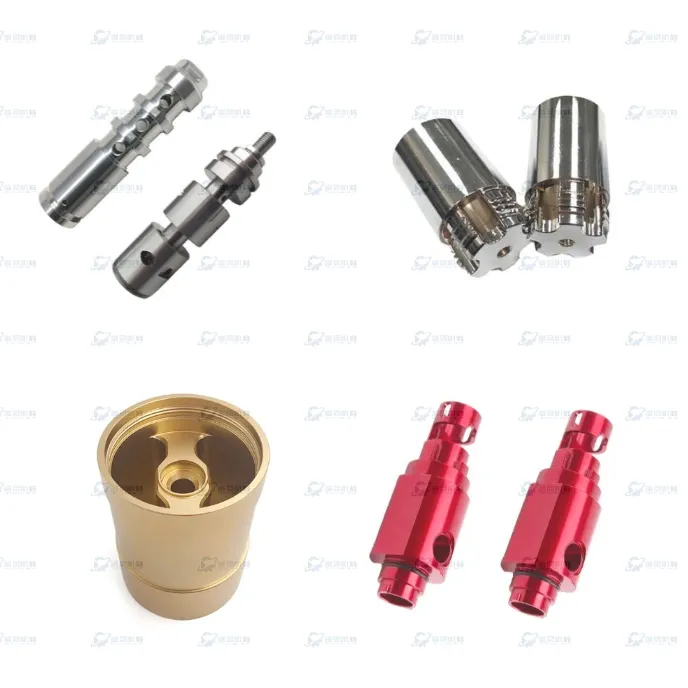
As a supplier of CNC turning parts, we have a team of experts who are well - versed in heat treatment processes. We work closely with our customers to understand their specific requirements and then select the most appropriate heat treatment method. We also use advanced testing equipment to ensure that the heat - treated parts meet the required quality standards.
If you're in the market for high - quality CNC turning parts and are interested in the best heat treatment options for your specific needs, we'd love to hear from you. Whether you need parts for a small - scale project or a large - scale production, we can provide you with customized solutions. Feel free to reach out to us to start a conversation about your procurement needs.
References
- ASM Handbook Volume 4: Heat Treating. ASM International.
- Metals Handbook Desk Edition, 3rd Edition. ASM International.
- Callister, W. D., & Rethwisch, D. G. (2010). Materials Science and Engineering: An Introduction. Wiley.