

As an aluminum die casting supplier, I've been in the industry long enough to know that quality control is super important. One of the key steps in ensuring top - notch products is the inspection of aluminum die - cast parts. In this blog, I'll share the various inspection methods we use to make sure our parts meet the highest standards.
Visual Inspection
Let's start with the most basic yet crucial method: visual inspection. It's the first line of defense in our quality control process. We train our inspectors to have eagle - eye vision to spot any obvious defects. They look for things like cracks, porosity, flash, and misruns.
Cracks can be a real deal - breaker as they can compromise the structural integrity of the part. Even a tiny crack can lead to failure down the line. Porosity, which are small holes in the metal, can also affect the strength and finish of the part. Flash is the excess metal that forms around the edges of the casting, and misruns occur when the molten aluminum doesn't fully fill the mold cavity.
Visual inspection is usually done under proper lighting conditions, and sometimes magnifying glasses or microscopes are used for a closer look. This method is quick and cost - effective, allowing us to catch a large number of defects early on.
Dimensional Inspection
After visual inspection, we move on to dimensional inspection. Every aluminum die - cast part is designed to have specific dimensions, and even a small deviation can cause problems during assembly. We use a variety of tools for this, such as calipers, micrometers, and coordinate measuring machines (CMMs).
Calipers are handy for measuring the outer and inner diameters, as well as the thickness of parts. Micrometers, on the other hand, offer more precise measurements, especially for smaller parts. CMMs are the heavy - hitters in dimensional inspection. They can measure complex geometries with high accuracy. These machines use a probe to touch different points on the part, and the data is then compared to the design specifications.
If a part fails the dimensional inspection, it might need to be re - machined or even scrapped. We take dimensional accuracy seriously because it directly impacts how well our parts fit into the final product. For example, if you're looking for Die Casting Parts for LED Lights, the parts need to be of the right size to ensure proper assembly and functionality.
Material Analysis
Another important aspect of inspection is material analysis. We need to make sure that the aluminum used in the casting has the right chemical composition. There are several methods for material analysis, including spectroscopy and chemical analysis.
Spectroscopy is a non - destructive method that uses light to determine the elements present in the aluminum. By analyzing the spectrum of light emitted or absorbed by the material, we can identify the different elements and their percentages. Chemical analysis, on the other hand, involves taking a sample of the material and subjecting it to various chemical tests.
The correct chemical composition is crucial because it affects the mechanical properties of the part, such as strength, hardness, and corrosion resistance. For instance, A356 Aluminum Casting has specific chemical requirements to ensure its performance in different applications.
Non - Destructive Testing (NDT)
Non - destructive testing methods are used to detect internal defects without damaging the part. These methods are especially useful for parts where destructive testing is not an option.
One common NDT method is ultrasonic testing. It works by sending high - frequency sound waves into the part. If there are any internal defects, such as cracks or voids, the sound waves will be reflected differently, and this can be detected by a receiver. Ultrasonic testing is great for detecting subsurface defects that might not be visible during visual inspection.
Another NDT method is X - ray testing. X - rays can penetrate the aluminum and create an image of the internal structure. This is similar to how medical X - rays work. X - ray testing is very effective for detecting hidden defects, especially in complex parts.
Magnetic particle testing is also used for parts made of ferromagnetic materials. A magnetic field is applied to the part, and iron particles are then sprinkled on the surface. If there are any surface or near - surface defects, the magnetic field will be disrupted, and the iron particles will gather at the defect site, making it visible.
Pressure Testing
Pressure testing is used to check the integrity of parts that are designed to hold fluids or gases. We use this method to ensure that there are no leaks in the casting.
There are two main types of pressure testing: hydrostatic testing and pneumatic testing. Hydrostatic testing involves filling the part with a liquid, usually water, and then applying pressure. The part is then checked for any signs of leakage. Pneumatic testing, on the other hand, uses air or gas instead of liquid. It's a bit more sensitive than hydrostatic testing but also more dangerous because of the risk of explosion if there is a major defect.
Pressure testing is crucial for parts used in applications like High Pressure Aluminum Casting. These parts need to be able to withstand high pressures without leaking.
Hardness Testing
Hardness testing is used to determine the hardness of the aluminum die - cast part. The hardness of a part can affect its wear resistance, machinability, and overall performance.

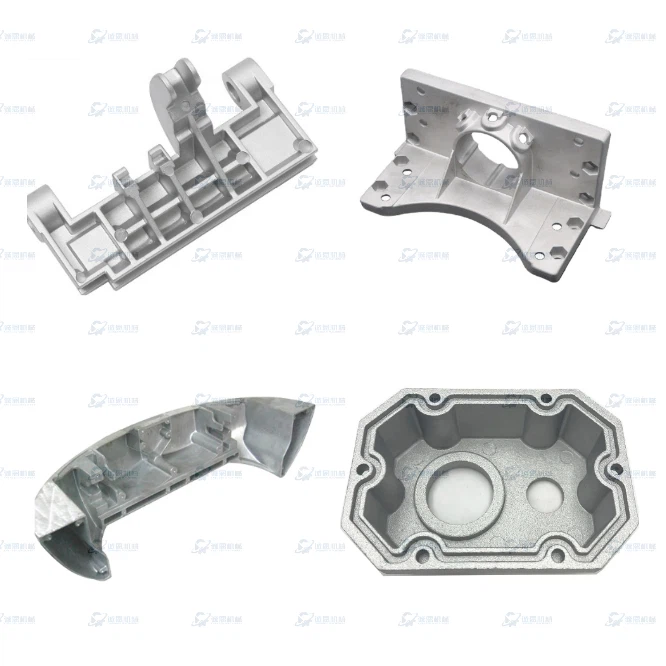
There are several methods for hardness testing, including the Brinell, Rockwell, and Vickers methods. The Brinell method uses a hard ball to indent the surface of the part, and the size of the indentation is measured to determine the hardness. The Rockwell method uses a diamond cone or a hard ball, and the depth of the indentation is measured. The Vickers method uses a square - based pyramid indenter, and the diagonal of the indentation is measured.
By testing the hardness of our parts, we can ensure that they meet the required specifications and will perform well in their intended applications.
Conclusion
In conclusion, there are many inspection methods available for aluminum die - cast parts, and each one plays a vital role in ensuring the quality of our products. From visual inspection to advanced non - destructive testing methods, we use a combination of techniques to catch any defects and make sure that our parts are of the highest quality.
If you're in the market for high - quality aluminum die - cast parts, don't hesitate to reach out. We're always ready to discuss your requirements and provide you with the best solutions. Whether you need parts for LED lights, high - pressure applications, or A356 aluminum casting, we've got you covered. Contact us today to start the procurement process and let's work together to bring your projects to life.
References
- ASM Handbook, Volume 15: Casting.
- Die Casting Engineer's Handbook.
- Nondestructive Testing Handbook, Volume 1: Ultrasonic Testing.