

Hey there! As a supplier of Aluminum Extrusion Parts, I often get asked about the load - bearing capacities of these parts. So, I thought I'd sit down and write a blog post to share some insights on this topic.
Understanding Aluminum Extrusion Parts
First off, let's quickly go over what aluminum extrusion parts are. Aluminum extrusion is a process where aluminum alloy is forced through a die with a specific cross - sectional profile. This creates parts with consistent shapes and sizes. These parts are used in a wide range of industries, from construction to automotive, because of their versatility, light weight, and corrosion resistance.
Factors Affecting Load - Bearing Capacity
The load - bearing capacity of aluminum extrusion parts depends on several factors.
1. Alloy Type
Different aluminum alloys have different mechanical properties. For example, the 6061 and 6063 alloys are quite popular. The 6061 Aluminum Extrusion Profile Parts are known for their good strength - to - weight ratio and excellent machinability. They can handle moderate to high loads, making them suitable for structural applications in the automotive and aerospace industries.
On the other hand, 6063 is often used for architectural applications. The CNC Machined AL6063 - T6 Extrusion Parts have a lower strength compared to 6061 but offer better surface finish and are easier to anodize. So, if you're looking for parts that don't need to bear extremely heavy loads but need a nice appearance, 6063 could be a great choice.
2. Cross - Sectional Shape
The shape of the extrusion plays a huge role in its load - bearing capacity. Parts with a larger cross - sectional area can generally support more weight. For instance, a square or rectangular extrusion might have a different load - bearing capacity compared to a circular one. Hollow extrusions can also be designed in a way that they are strong enough to support significant loads while keeping the weight down. This is especially important in applications where weight is a concern, like in the transportation industry.
3. Heat Treatment
Heat treatment can significantly enhance the strength of aluminum extrusion parts. The T6 temper, for example, involves solution heat treating followed by artificial aging. This process can increase the hardness and strength of the parts, thereby improving their load - bearing capacity. So, when you're choosing aluminum extrusion parts, make sure to consider the heat treatment they've undergone.
4. Surface Finish
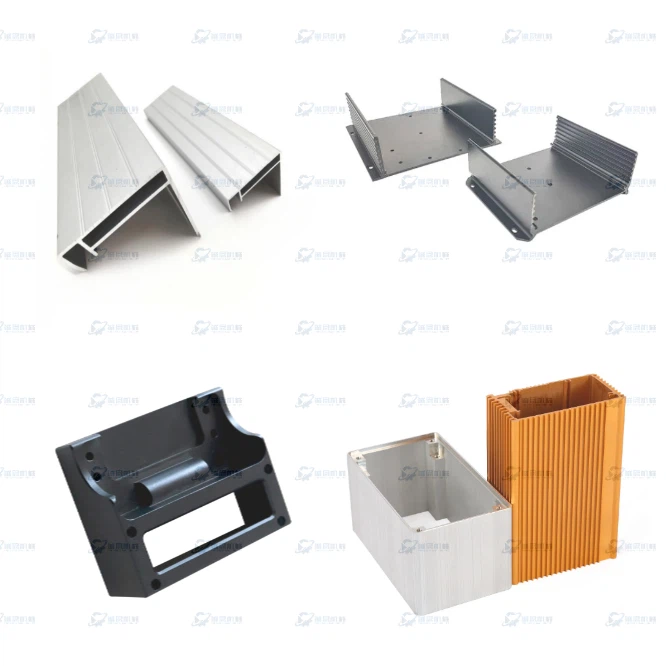
The surface finish might not seem directly related to load - bearing capacity, but it can have an impact. Anodized parts, like the Anodized Aluminum Extrusion Parts, have a protective oxide layer on the surface. This layer not only provides corrosion resistance but can also prevent surface damage that could potentially weaken the part under load.

Calculating Load - Bearing Capacity
Calculating the exact load - bearing capacity of an aluminum extrusion part is not a simple task. It usually requires complex engineering calculations that take into account all the factors we've discussed above. There are also standards and guidelines that engineers follow, such as those set by the Aluminum Association.
In general, engineers use formulas based on the material properties, cross - sectional geometry, and the type of load (e.g., static or dynamic) to estimate the load - bearing capacity. They might also use computer - aided engineering (CAE) software to simulate the behavior of the part under different loads.
Real - World Applications
Let's take a look at some real - world applications to see how load - bearing capacity matters.
Construction
In construction, aluminum extrusion parts are used for window frames, curtain walls, and structural supports. Window frames need to support their own weight as well as the weight of the glass. They also need to withstand wind loads. Structural supports, on the other hand, need to bear the weight of the building or structure they are part of. So, choosing the right aluminum extrusion parts with the appropriate load - bearing capacity is crucial for the safety and durability of the construction.
Automotive
In the automotive industry, aluminum extrusion parts are used for engine components, chassis parts, and body frames. Engine components need to withstand high temperatures and mechanical stresses. Chassis parts need to support the weight of the vehicle and absorb the shocks from the road. Body frames need to provide structural integrity and protect the passengers in case of a collision. All these applications require parts with specific load - bearing capacities to ensure the performance and safety of the vehicle.
Electronics
In the electronics industry, aluminum extrusion parts are used for heat sinks and enclosures. Heat sinks need to dissipate heat efficiently while also being able to support their own weight and any additional components mounted on them. Enclosures need to protect the electronic components from external forces and provide a stable structure. So, load - bearing capacity is still an important consideration in these applications.
Choosing the Right Aluminum Extrusion Parts
When you're in the market for aluminum extrusion parts, it's important to work with a reliable supplier. At our company, we have a team of experts who can help you choose the right parts based on your specific load - bearing requirements. We offer a wide range of alloys, cross - sectional shapes, and finishes to meet your needs.
Whether you're working on a small DIY project or a large - scale industrial application, we can provide you with high - quality aluminum extrusion parts. We also offer custom - machining services to ensure that the parts fit your exact specifications.
Let's Connect
If you're interested in learning more about our aluminum extrusion parts or need help with choosing the right parts for your project, don't hesitate to get in touch. We're here to answer all your questions and guide you through the procurement process. You can reach out to us to start a conversation about your requirements. We look forward to working with you on your next project!
References
- Aluminum Association, "Aluminum Design Manual"
- Engineering textbooks on materials science and mechanics of materials.