

What are the standards for aluminum extrusion parts?
As a seasoned supplier of aluminum extrusion parts, I've witnessed firsthand the vital role that standards play in this industry. Aluminum extrusion is a manufacturing process where aluminum alloy is forced through a die with a specific cross-sectional profile. The resulting parts are used in a wide range of applications, from automotive and aerospace to construction and consumer electronics. In this blog, I'll delve into the key standards that govern aluminum extrusion parts, providing insights into what makes a high - quality product.
Material Standards
The quality of aluminum extrusion parts starts with the raw material. Aluminum alloys are classified based on their chemical composition and mechanical properties. One of the most commonly used alloys in extrusion is 6061. 6061 Aluminum Extrusion Profile Parts are known for their excellent corrosion resistance, high strength - to - weight ratio, and good machinability. The American Society for Testing and Materials (ASTM) has set standards for 6061 aluminum alloy, including ASTM B221, which specifies the requirements for aluminum and aluminum - alloy extruded bars, rods, wire, profiles, and tubes.
Another popular alloy is 6063. CNC Machined AL6063 - T6 Extrusion Parts are often used in architectural applications due to their smooth surface finish and good extrudability. ASTM B221 also covers 6063 alloy, ensuring that the material meets the necessary chemical and mechanical property requirements.
The chemical composition of the aluminum alloy is crucial. For example, the amount of silicon, magnesium, and copper in the alloy can significantly affect its strength, corrosion resistance, and heat - treatability. Manufacturers must adhere to strict limits on these elements to ensure consistent quality in the extrusion parts.
Dimensional Standards
Precise dimensions are essential for aluminum extrusion parts, especially when they are used in assemblies or systems. Dimensional standards define the allowable tolerances for length, width, height, wall thickness, and other critical dimensions.
The International Organization for Standardization (ISO) has developed a series of standards for dimensional tolerances in metal products, including aluminum extrusions. ISO 2768 provides general tolerances for linear and angular dimensions without individual tolerance indications. This standard simplifies the design process by allowing for a certain degree of variation in dimensions, while still ensuring that the parts will fit and function correctly.
In addition to general tolerances, there are also industry - specific dimensional standards. For example, in the automotive industry, aluminum extrusion parts used in engine components or chassis systems may have very tight dimensional tolerances to ensure proper performance and safety.
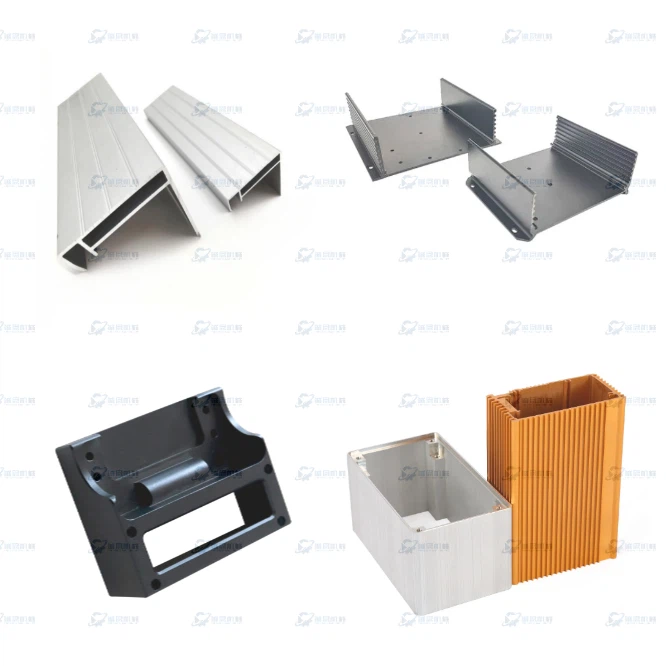

Surface Finish Standards
The surface finish of aluminum extrusion parts can impact both their appearance and functionality. A smooth surface finish can improve corrosion resistance, reduce friction, and enhance the aesthetic appeal of the parts.
Anodizing is a common surface treatment for aluminum extrusion parts. Anodized Aluminum Extrusion Parts have a hard, durable oxide layer on the surface that provides excellent corrosion protection and can be dyed in a variety of colors. The Aluminum Association has established standards for anodized aluminum, including AA - 611 for architectural anodizing. These standards specify the thickness of the anodic oxide layer, the appearance requirements, and the corrosion resistance properties.
For parts that require a very smooth surface finish, such as those used in optical or electronic applications, additional polishing or grinding processes may be necessary. The surface roughness is typically measured in micrometers (μm) or micro - inches (μin), and standards such as ISO 4287 define the parameters for measuring and specifying surface roughness.
Mechanical Property Standards
Mechanical properties, such as tensile strength, yield strength, and elongation, are critical for determining the performance of aluminum extrusion parts. These properties are influenced by the alloy composition, the extrusion process, and any subsequent heat treatment.
ASTM standards, such as ASTM B557, provide test methods for determining the tensile properties of aluminum and aluminum - alloy products. Tensile strength is the maximum stress that a material can withstand before breaking, while yield strength is the stress at which the material begins to deform plastically. Elongation measures the amount of stretching that a material can undergo before breaking.
In addition to tensile properties, other mechanical properties, such as hardness and impact resistance, may also be important depending on the application. For example, parts used in high - impact environments, such as automotive bumpers or aerospace components, need to have good impact resistance.
Quality Control Standards
To ensure that aluminum extrusion parts meet the required standards, manufacturers must implement a comprehensive quality control system. This includes inspection and testing at various stages of the manufacturing process, from raw material inspection to final product inspection.
Incoming raw materials should be inspected for chemical composition, mechanical properties, and dimensional accuracy. During the extrusion process, in - process inspections can be carried out to monitor the quality of the extruded parts, such as checking the surface finish, dimensional tolerances, and mechanical properties.
Final product inspection is the last step in the quality control process. This may involve visual inspection, dimensional measurement, and mechanical testing to ensure that the parts meet all the specified standards. ISO 9001 is a widely recognized quality management system standard that many aluminum extrusion part manufacturers follow to ensure consistent quality in their products.
Importance of Adhering to Standards
Adhering to standards is crucial for several reasons. Firstly, it ensures the quality and reliability of the aluminum extrusion parts. Customers can have confidence in the products they purchase, knowing that they meet the necessary performance and safety requirements.
Secondly, standards help to facilitate international trade. When manufacturers follow internationally recognized standards, it becomes easier to sell their products in different markets around the world.
Finally, adhering to standards can also lead to cost savings. By producing parts that meet the required standards, manufacturers can reduce the number of rejected parts, minimize rework, and improve overall production efficiency.
Conclusion
In conclusion, the standards for aluminum extrusion parts cover a wide range of aspects, including material, dimensional, surface finish, mechanical property, and quality control. As a supplier of aluminum extrusion parts, we are committed to meeting and exceeding these standards to provide our customers with high - quality products.
If you are in the market for aluminum extrusion parts and are looking for a reliable supplier, we would be delighted to discuss your requirements. Whether you need 6061 Aluminum Extrusion Profile Parts, Anodized Aluminum Extrusion Parts, or CNC Machined AL6063 - T6 Extrusion Parts, we have the expertise and capabilities to deliver. Contact us today to start the procurement process and explore how we can meet your specific needs.
References
- ASTM International. ASTM B221 - Standard Specification for Aluminum and Aluminum - Alloy Extruded Bars, Rods, Wire, Profiles, and Tubes.
- International Organization for Standardization. ISO 2768 - General Tolerances for Linear and Angular Dimensions without Individual Tolerance Indications.
- Aluminum Association. AA - 611 - Architectural Anodizing Standard.
- ASTM International. ASTM B557 - Standard Test Methods for Tension Testing Wrought and Cast Aluminum - and Magnesium - Alloy Products.
- International Organization for Standardization. ISO 9001 - Quality Management Systems - Requirements.
- International Organization for Standardization. ISO 4287 - Geometrical Product Specifications (GPS) - Surface Texture: Profile Method - Terms, Definitions and Surface Texture Parameters.