

As a seasoned supplier of Aluminum Extrusion Parts, I've witnessed firsthand the diverse applications and unique characteristics of both aluminum extrusion parts and die - cast aluminum parts. In this blog, I'll delve into the key differences between these two types of aluminum components, which will help you make a more informed decision when choosing the right parts for your specific needs.
Manufacturing Process
The manufacturing process is the fundamental difference between aluminum extrusion parts and die - cast aluminum parts.
Aluminum Extrusion
Aluminum extrusion is a process where a heated aluminum billet is forced through a shaped die, much like squeezing toothpaste out of a tube. The die determines the cross - sectional shape of the extruded part. Once the aluminum passes through the die, it is cooled rapidly, often by air or water. This process can produce long, continuous shapes with a consistent cross - section, such as bars, tubes, and complex profiles. For example, if you need a long, thin aluminum frame with a specific cross - sectional shape for a window or door, aluminum extrusion is an ideal choice. You can find a variety of Anodized Aluminum Extrusion Parts in our product catalog, which are made through this efficient process.
Die - Casting
Die - casting, on the other hand, involves melting aluminum and then injecting it under high pressure into a steel mold, also known as a die. The molten aluminum fills the cavity of the die, taking on its shape. After the aluminum cools and solidifies, the die is opened, and the part is ejected. This process is suitable for producing complex, three - dimensional shapes with high precision and relatively thin walls. For instance, automotive engine components or electronic device housings often use die - cast aluminum parts due to their ability to achieve intricate designs.
Design Flexibility
Each manufacturing method offers different levels of design flexibility.

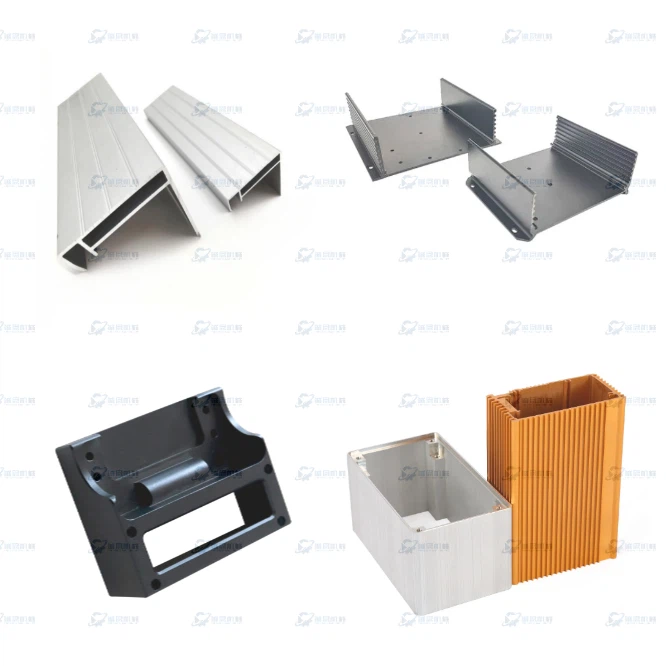
Aluminum Extrusion
Aluminum extrusion provides excellent flexibility in creating parts with a constant cross - section. You can design almost any shape, from simple geometric forms to highly complex profiles with multiple cavities and features. However, the length of the extruded part is typically not a limiting factor, and it can be cut to the desired length after extrusion. This makes it a great option for applications where long, uniform shapes are required. Our CNC Machined AL6063 - T6 Extrusion Parts showcase the design flexibility of aluminum extrusion, as they can be customized with various cross - sectional shapes and then further machined to meet specific requirements.
Die - Casting
Die - casting offers high design flexibility in creating complex three - dimensional shapes. It can produce parts with intricate details, such as undercuts, bosses, and thin walls, which are difficult or impossible to achieve with extrusion. However, the size of the die - cast part is limited by the size of the die - casting machine and the die itself. Also, changes to the design of a die - cast part may require significant modifications to the die, which can be time - consuming and expensive.
Surface Finish
The surface finish of the parts is another important aspect to consider.
Aluminum Extrusion
Extruded aluminum parts generally have a smooth surface finish. After extrusion, the parts can be further processed to achieve different surface qualities, such as anodizing, powder coating, or polishing. Anodizing, in particular, is a popular surface treatment for aluminum extrusion parts. It not only enhances the corrosion resistance of the parts but also provides an aesthetically pleasing appearance. Our Anodized Aluminum Extrusion Parts are a prime example of how extrusion parts can be transformed with high - quality surface finishes.
Die - Casting
Die - cast aluminum parts may have a slightly rougher surface finish compared to extruded parts. The surface may have some porosity or small defects due to the high - pressure injection process. However, these surface imperfections can be minimized through post - processing techniques such as machining, sandblasting, or plating. Die - cast parts are often used in applications where the surface finish is not the primary concern, or where additional surface treatments can be applied to achieve the desired appearance.
Mechanical Properties
The mechanical properties of aluminum extrusion parts and die - cast aluminum parts also differ.
Aluminum Extrusion
Extruded aluminum parts typically have good strength - to - weight ratios. The extrusion process aligns the aluminum grains in the direction of extrusion, which can enhance the part's strength in that direction. Additionally, extruded parts can be heat - treated to further improve their mechanical properties. For example, AL6063 - T6 is a common aluminum alloy used in extrusion, and it offers excellent corrosion resistance and moderate strength, making it suitable for a wide range of applications, from structural components to consumer products.
Die - Casting
Die - cast aluminum parts can have high strength and dimensional stability. The high - pressure injection process ensures that the molten aluminum fills the die cavity completely, resulting in a dense and uniform structure. However, the mechanical properties of die - cast parts can be affected by factors such as the alloy composition, the die - casting process parameters, and the presence of porosity. In general, die - cast parts are often used in applications where high strength and complex shapes are required, such as in the automotive and aerospace industries.
Cost Considerations
Cost is a crucial factor in any manufacturing decision.
Aluminum Extrusion
The initial tooling cost for aluminum extrusion is relatively low compared to die - casting. The die for extrusion is simpler and less expensive to manufacture. Additionally, the extrusion process is highly efficient for producing long, continuous parts, which can result in lower per - unit costs for large - volume production. However, if significant secondary machining is required to achieve the final part shape, the cost may increase.
Die - Casting
Die - casting has a high initial tooling cost because the steel dies used in the process are complex and expensive to manufacture. However, for high - volume production, the per - unit cost of die - cast parts can be relatively low. The high - pressure injection process allows for fast production cycles, which can offset the initial investment in the die over time.
Application Areas
These differences in manufacturing process, design flexibility, surface finish, mechanical properties, and cost lead to different application areas for aluminum extrusion parts and die - cast aluminum parts.
Aluminum Extrusion
Aluminum extrusion parts are widely used in industries such as construction, transportation, and electronics. In the construction industry, they are used for window frames, door frames, curtain walls, and structural supports. In the transportation industry, extrusion parts can be found in automotive frames, bicycle frames, and train compartments. Our Aluminum Alloy Extrusion Hardware Fittings are commonly used in these applications due to their durability and design flexibility.
Die - Casting
Die - cast aluminum parts are commonly used in industries where complex shapes and high strength are required, such as automotive, aerospace, and electronics. In the automotive industry, they are used for engine blocks, transmission cases, and other critical components. In the electronics industry, die - cast parts are used for device housings, heat sinks, and connectors.
Choosing the Right Option
When choosing between aluminum extrusion parts and die - cast aluminum parts, you need to consider several factors. If you need a long, continuous part with a consistent cross - section and a relatively simple design, aluminum extrusion may be the best choice. If you require a complex, three - dimensional shape with high precision and thin walls, die - casting may be more suitable. Additionally, cost, surface finish requirements, and mechanical properties should also be taken into account.
As a supplier of Aluminum Extrusion Parts, we have the expertise and experience to help you make the right decision. We offer a wide range of high - quality aluminum extrusion products, from standard profiles to customized components. If you are interested in our products or have any questions about choosing the right aluminum parts for your project, please feel free to contact us. We are always ready to assist you with your procurement and answer any technical queries you may have.
References
- "Aluminum Extrusion Technology Handbook", ASM International
- "Die - Casting Design and Engineering Handbook", Society of Die Casting Engineers
- "Manufacturing Engineering and Technology", Serope Kalpakjian and Steven Schmid