

As a supplier in the aluminum die casting industry, I've witnessed firsthand the transformative power of research and development (R&D) in shaping the future of this field. Aluminum die casting is a manufacturing process that involves forcing molten aluminum under high pressure into a steel mold, or die, to create complex and precise parts. It's a versatile technique used across various industries, from automotive and aerospace to consumer electronics and beyond. In this blog, I'll delve into the crucial role of R&D in aluminum die casting, exploring how it drives innovation, improves quality, and enhances competitiveness.
Driving Innovation in Material Selection and Processing
One of the primary areas where R&D makes a significant impact is in the selection and development of new aluminum alloys. Traditional alloys have served the industry well, but as the demand for lighter, stronger, and more corrosion-resistant parts grows, there's a need for continuous improvement. Through extensive research, scientists and engineers are able to identify new alloy compositions that offer superior properties. For example, some newly developed alloys can withstand higher temperatures, making them ideal for applications in engines and other high-heat environments.
Moreover, R&D efforts focus on optimizing the processing parameters of aluminum die casting. This includes refining the melting, pouring, and solidification processes to ensure that the final parts have the desired microstructure and mechanical properties. By experimenting with different processing conditions, we can reduce defects such as porosity, shrinkage, and cracking, resulting in higher-quality parts. For instance, advanced simulation software is now used to model the die casting process, allowing us to predict and address potential issues before they occur.
Enhancing Product Design and Functionality
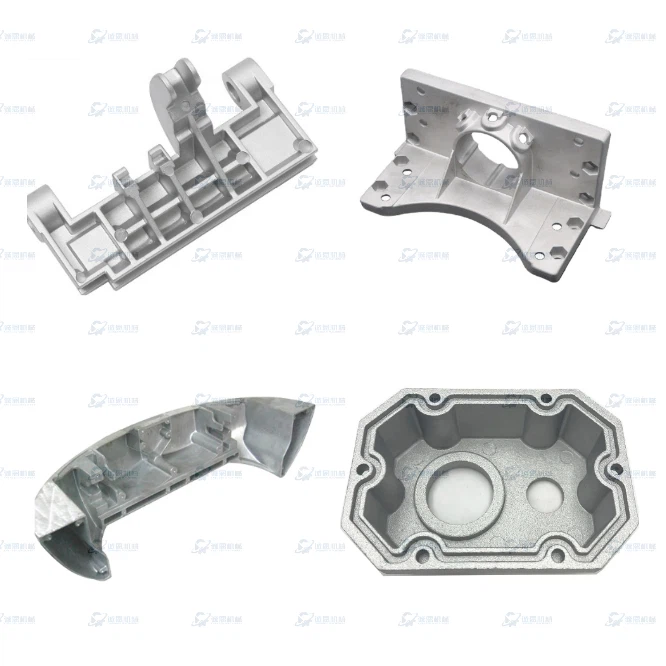
Research and development also play a vital role in enhancing the design and functionality of aluminum die-cast parts. With the help of modern design tools and techniques, we can create more complex and efficient part geometries. This not only allows for better integration of components but also enables the development of innovative products that meet the evolving needs of our customers.
For example, in the automotive industry, R&D has led to the design of lightweight aluminum die-cast parts that improve fuel efficiency without compromising on safety. These parts can be found in various applications, such as engine blocks, transmission cases, and suspension components. Similarly, in the aerospace industry, aluminum die-cast parts are used to reduce weight and increase the performance of aircraft. The ability to design and manufacture parts with high precision and accuracy is crucial in these industries, and R&D is the driving force behind these advancements.

Improving Quality and Reliability
Quality and reliability are of utmost importance in the aluminum die casting industry. Through R&D, we can implement advanced quality control measures to ensure that every part meets the highest standards. This includes the use of non-destructive testing techniques, such as X-ray and ultrasonic inspection, to detect internal defects. In addition, we can develop and implement statistical process control methods to monitor and improve the manufacturing process, reducing variability and ensuring consistent quality.
Furthermore, R&D helps us to understand the long-term performance of aluminum die-cast parts. By conducting extensive testing under various conditions, we can predict how parts will behave over time and identify potential failure modes. This allows us to make design improvements and implement preventive measures to enhance the reliability of our products. For example, if a part is found to be susceptible to corrosion in a particular environment, we can develop a protective coating or modify the alloy composition to improve its resistance.
Cost Reduction and Efficiency Improvement
In today's competitive market, cost reduction and efficiency improvement are essential for the success of any business. Research and development can help us achieve these goals by identifying ways to optimize the manufacturing process. This includes reducing material waste, improving energy efficiency, and increasing production speed.
For example, by developing new die designs and gating systems, we can minimize the amount of excess material that is cut off during the finishing process. This not only reduces material costs but also decreases the environmental impact of our operations. In addition, R&D efforts focus on improving the energy efficiency of the die casting process. By using advanced heating and cooling systems, we can reduce the energy consumption of our equipment, resulting in lower operating costs.
Staying Competitive in the Global Market
The aluminum die casting industry is highly competitive, with companies around the world vying for market share. To stay ahead of the competition, it's crucial to invest in R&D. By continuously innovating and improving our products and processes, we can offer our customers better value and higher-quality solutions.
For instance, by developing new alloys and processing techniques, we can produce parts that are lighter, stronger, and more cost-effective than those of our competitors. This allows us to attract new customers and retain existing ones. Moreover, R&D helps us to stay up-to-date with the latest industry trends and technological advancements. By being at the forefront of innovation, we can position ourselves as leaders in the market and gain a competitive edge.
Case Studies and Examples
To illustrate the impact of R&D in aluminum die casting, let's look at some real-world examples.
-
Aluminum Die Casting for ATV Parts: Aluminum Die Casting for ATV Parts The ATV industry demands parts that are lightweight, durable, and able to withstand harsh operating conditions. Through R&D, we've been able to develop advanced aluminum alloys and manufacturing processes that meet these requirements. Our ATV parts are not only strong and reliable but also offer excellent corrosion resistance, ensuring a long service life.
-
A356 Aluminum Casting: A356 Aluminum Casting A356 is a popular aluminum alloy used in die casting due to its good mechanical properties and castability. Through continuous R&D, we've been able to optimize the processing of A356 aluminum casting, resulting in parts with improved strength and ductility. These parts are widely used in the automotive and aerospace industries, where high performance is critical.
-
High Pressure Aluminum Casting: High Pressure Aluminum Casting High pressure aluminum casting is a specialized process that allows for the production of parts with high precision and complexity. R&D has played a crucial role in improving this process, leading to the development of advanced die designs and processing techniques. Our high pressure aluminum castings offer excellent dimensional accuracy and surface finish, making them suitable for a wide range of applications.
Conclusion
In conclusion, research and development are essential for the growth and success of the aluminum die casting industry. It drives innovation in material selection and processing, enhances product design and functionality, improves quality and reliability, reduces costs, and helps us stay competitive in the global market. As a supplier, we're committed to investing in R&D to continuously improve our products and processes.
If you're interested in learning more about our aluminum die casting services or have specific requirements for your project, we invite you to contact us for a detailed discussion. Our team of experts is ready to assist you in finding the best solutions for your needs.
References
- Davis, J. R. (Ed.). (2008). Aluminum and Aluminum Alloys. ASM International.
- Kalpakjian, S., & Schmid, S. R. (2010). Manufacturing Engineering and Technology. Pearson.
- Munson, B. R., Young, D. F., & Okiishi, T. H. (2009). Fundamentals of Fluid Mechanics. Wiley.