

In the world of manufacturing, CNC (Computer Numerical Control) turning is a fundamental process that plays a pivotal role in creating high - precision parts. As a trusted supplier of CNC turning parts, I am often asked about the tolerance range for these parts. Tolerance is a critical aspect that can significantly impact the functionality, quality, and cost of the final product. In this blog, I will delve into the concept of tolerance range for CNC turning parts, exploring its importance, factors affecting it, and typical values.
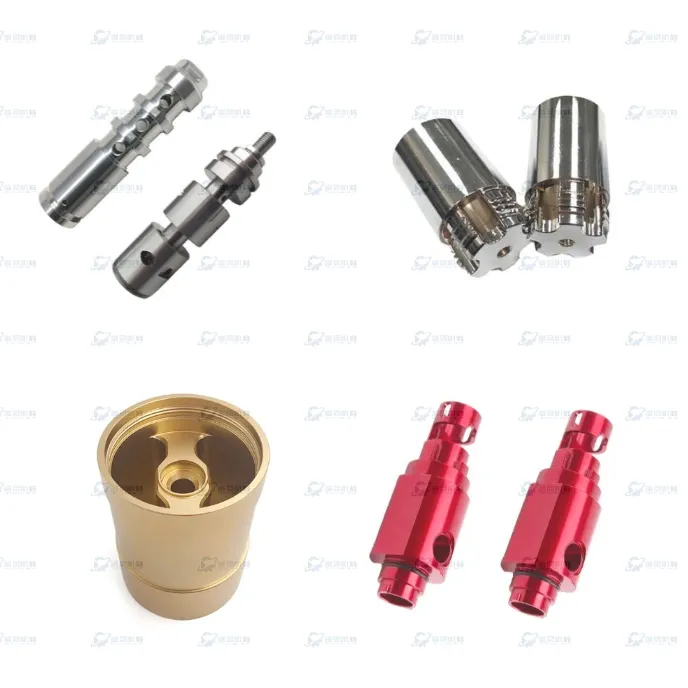

Understanding Tolerance in CNC Turning
Tolerance in CNC turning refers to the allowable deviation from the specified dimension of a part. Every part is designed with a set of nominal dimensions, which are the ideal or target values. However, due to various factors in the manufacturing process, it is nearly impossible to produce parts that exactly match these nominal dimensions. Tolerance defines the acceptable upper and lower limits within which the actual dimension of the part can vary.
For example, if a shaft is designed to have a diameter of 20 mm with a tolerance of ±0.05 mm, the acceptable diameter of the shaft after CNC turning can range from 19.95 mm to 20.05 mm. Any part within this range is considered to be within specification.
Importance of Tolerance Range
The tolerance range is of utmost importance in CNC turning for several reasons. Firstly, it ensures the proper fit and function of the part within an assembly. If a part is too large or too small due to an out - of - tolerance dimension, it may not fit correctly with other components, leading to poor performance or even failure of the entire system.
Secondly, tolerance affects the quality and reliability of the product. Parts with tight tolerances generally have higher precision and better surface finish, which can enhance the overall durability and performance of the end - product.
Finally, tolerance range has a direct impact on the cost of production. Tighter tolerances require more precise machining processes, better - quality tools, and more skilled operators. This can increase the production time and cost. Therefore, it is essential to balance the required tolerance with the cost - effectiveness of the manufacturing process.
Factors Affecting Tolerance Range in CNC Turning
Machine Accuracy
The accuracy of the CNC lathe machine is a primary factor influencing the tolerance range. High - quality CNC lathes are designed to provide precise control over the cutting tool's movement, resulting in more accurate parts. Factors such as the quality of the lead screws, the rigidity of the machine structure, and the precision of the control system can all affect the machine's accuracy.
Tool Wear
Cutting tools in CNC turning gradually wear out during the machining process. As the tool wears, its cutting edge becomes dull, which can lead to dimensional inaccuracies in the part. Regular tool replacement and proper tool management are crucial to maintaining the desired tolerance range.
Material Properties
The properties of the material being machined can also impact the tolerance range. Harder materials may be more difficult to machine precisely, as they can cause more tool wear and generate more heat during cutting. On the other hand, softer materials may be more prone to deformation, which can also affect the part's dimensions.
Operator Skill
The skill and experience of the CNC machine operator play a significant role in achieving the desired tolerance range. A skilled operator can adjust the machining parameters, such as cutting speed, feed rate, and depth of cut, to optimize the machining process and minimize dimensional errors.
Typical Tolerance Ranges for CNC Turning Parts
The tolerance range for CNC turning parts can vary widely depending on the application and the requirements of the part. Here are some typical tolerance ranges for different types of CNC turning parts:
General - Purpose Parts
For general - purpose CNC turning parts, such as simple shafts and bushings, a common tolerance range is ±0.05 mm to ±0.1 mm. These parts are often used in less critical applications where a moderate level of precision is sufficient.
Precision Parts
In applications where high precision is required, such as aerospace and medical devices, the tolerance range can be much tighter. Precision parts may have a tolerance range of ±0.01 mm to ±0.005 mm or even less. Achieving these tight tolerances requires advanced machining techniques and high - precision equipment.
Our Capabilities as a CNC Turning Parts Supplier
As a supplier of CNC turning parts, we have the expertise and equipment to produce parts with a wide range of tolerance requirements. Our state - of - the - art CNC lathe machines are capable of achieving high precision and tight tolerances. We also have a team of experienced operators who are well - trained in optimizing the machining process to ensure the quality and accuracy of the parts.
We offer a variety of CNC turning services, including Precision Wire Cutting Parts, CNC Lathe Machine Surface Finish Parts, and CNC Machined SS316L Products. Whether you need general - purpose parts or high - precision components, we can meet your needs.
Working with Us
When working with us, we start by understanding your specific requirements, including the desired tolerance range, material, and quantity. Our engineering team will then design a customized machining process to ensure that the parts meet your specifications. We use advanced measurement tools, such as coordinate measuring machines (CMMs), to verify the dimensions of the parts and ensure that they are within the tolerance range.
We also offer competitive pricing and fast turnaround times. Our goal is to provide you with high - quality CNC turning parts at a reasonable cost and in a timely manner.
Contact Us for Your CNC Turning Parts Needs
If you are in need of CNC turning parts, we invite you to contact us for a quote. Our sales team will be happy to discuss your project and provide you with the best solution. We are committed to providing excellent customer service and ensuring your satisfaction with our products.
References
- Groover, M. P. (2010). Fundamentals of Modern Manufacturing: Materials, Processes, and Systems. Wiley.
- Kalpakjian, S., & Schmid, S. R. (2008). Manufacturing Engineering and Technology. Pearson Prentice Hall.