

Can a Wall - Mounted Banister be Used in a Basement?
As a supplier of wall - mounted banisters, I often get asked whether these products can be used in basements. The answer is a resounding yes, but there are several factors to consider to ensure that the installation is safe, functional, and aesthetically pleasing.
1. Environmental Considerations
Basements typically have a different environment compared to other parts of a building. One of the most significant concerns is moisture. Basements are prone to dampness, which can lead to issues such as rust, mold, and mildew. When choosing a wall - mounted banister for a basement, it's crucial to select materials that are resistant to moisture.
Stainless steel is an excellent choice for basement banisters. It is highly corrosion - resistant, which means it can withstand the damp conditions often found in basements without rusting. Our Stainless Steel Bathroom Safety Rails are not only suitable for bathrooms but also for basements. They are made from high - quality stainless steel that can resist the effects of moisture and humidity over time.
Another option is powder - coated aluminum. Powder coating provides an extra layer of protection against moisture and can be customized in various colors to match the basement's decor. This material is lightweight yet strong, making it easy to install and durable enough for long - term use in a basement setting.
2. Structural Integrity
The basement walls must be able to support the weight of the wall - mounted banister. Before installation, it's essential to assess the wall type. Concrete and brick walls are generally strong enough to support banisters without any issues. However, if the basement has drywall or plaster walls, additional reinforcement may be required.
For drywall or plaster walls, wall anchors or toggle bolts can be used to provide a secure attachment. These fasteners distribute the weight of the banister more evenly across the wall, reducing the risk of the banister pulling away from the wall. In some cases, it may be necessary to install blocking between the wall studs to provide a more solid mounting surface.
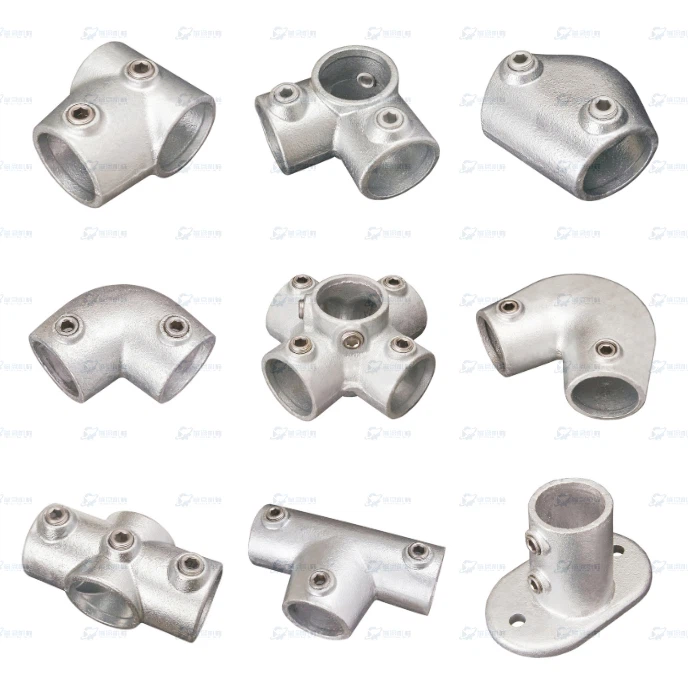
Our Scaffold Handrail Clamp Fittings can also be used to ensure a strong and secure connection between the banister and the wall. These fittings are designed to provide a tight grip and can be adjusted to fit different wall thicknesses and banister sizes.
3. Safety Requirements
Safety is of utmost importance when installing a wall - mounted banister in a basement. The banister should be installed at the correct height to provide adequate support for users. In most cases, the top of the banister should be between 34 and 38 inches above the stair treads or walking surface.
The spacing between the balusters or pickets should also comply with safety codes. In the United States, the maximum spacing between balusters is typically 4 inches to prevent small children from getting stuck. Additionally, the banister should be able to withstand a certain amount of force without breaking or coming loose.
Our wall - mounted banisters are designed and tested to meet or exceed safety standards. We ensure that all our products are made from high - quality materials and are manufactured with precision to provide reliable support and safety for users.
4. Aesthetic Appeal
The basement is often an area where homeowners want to create a unique and functional space. The wall - mounted banister can contribute to the overall aesthetic of the basement. There are various styles and designs available to suit different tastes and basement decors.
For a modern and minimalist look, a sleek stainless steel banister with clean lines can be a great choice. It can add a touch of sophistication to the basement while providing practical support. On the other hand, if the basement has a more traditional or rustic style, a wooden banister with decorative details can complement the decor.
Our Wall Mounted Drop Down Rail is a versatile option that can be both functional and aesthetically pleasing. It can be easily folded down when not in use, saving space in the basement. When in use, it provides a reliable handrail for users.
5. Installation and Maintenance
Installing a wall - mounted banister in a basement is a relatively straightforward process, but it does require some basic tools and skills. It's important to follow the manufacturer's instructions carefully to ensure a proper installation. If you're not confident in your DIY skills, it's recommended to hire a professional installer.
Maintenance of the wall - mounted banister is also important to ensure its longevity. Regular cleaning with a mild detergent and water can help preserve the appearance of the banister. For stainless steel banisters, occasional polishing can keep them looking shiny and new.

In conclusion, a wall - mounted banister can be a great addition to a basement. It provides safety, functionality, and aesthetic appeal. As a supplier of wall - mounted banisters, we offer a wide range of products that are suitable for basements. Whether you're looking for a moisture - resistant stainless steel banister, a stylish wooden banister, or a versatile drop - down rail, we have the right solution for you.
If you're interested in purchasing a wall - mounted banister for your basement or have any questions about our products, please don't hesitate to contact us for a consultation. We're here to help you make the best choice for your basement project.
References
- Building Codes and Standards for Handrails and Banisters, National Building Code Institute.
- Materials and Their Properties in Construction, Construction Materials Handbook.
- Installation Guides for Wall - Mounted Handrails, Various Manufacturers.