

Hey there! As a supplier of wall-mounted handrails, I often get asked a bunch of questions about installation, maintenance, and all that jazz. One question that pops up quite a bit is, "Do wall-mounted handrails need to be sanded before painting?" Well, let's dig into this topic and find out the answer.
First off, let's talk about why sanding might be a good idea. When you sand a handrail before painting, you're essentially creating a better surface for the paint to adhere to. Think of it like preparing a canvas for a painting. If the canvas is smooth and clean, the paint will go on evenly and stick better. The same goes for handrails.
If the handrail has a shiny or smooth finish, like a stainless steel one, paint might not stick to it very well right off the bat. Sanding helps to rough up that surface a little bit, giving the paint some "tooth" to grab onto. This can prevent the paint from peeling or chipping off over time, which is a big plus, especially in high-traffic areas where the handrail gets a lot of use.
Another reason to sand is to remove any dirt, grime, or old paint that might be on the handrail. Over time, handrails can accumulate all sorts of gunk, and if you paint over it, the new paint job won't look as good and might not last as long. Sanding can help you get rid of that buildup and start with a clean slate.
Now, not all handrails need to be sanded before painting. If the handrail is made of a porous material like wood that's already in good condition and has a rough surface, sanding might not be necessary. In fact, if the wood is already absorbent, sanding too much could make it absorb too much paint, which might not look great.
Let's say you have a wooden handrail that's been stained or varnished. If the finish is in good shape and you just want to give it a new color, you might be able to skip the sanding step. However, you'll still want to clean the handrail thoroughly to remove any dirt or dust before painting.
For metal handrails, it really depends on the type of metal and the finish. As I mentioned earlier, stainless steel handrails usually benefit from a little sanding to help the paint stick. But if the metal has a textured finish or is already rusty, sanding can help smooth out the surface and prepare it for painting.
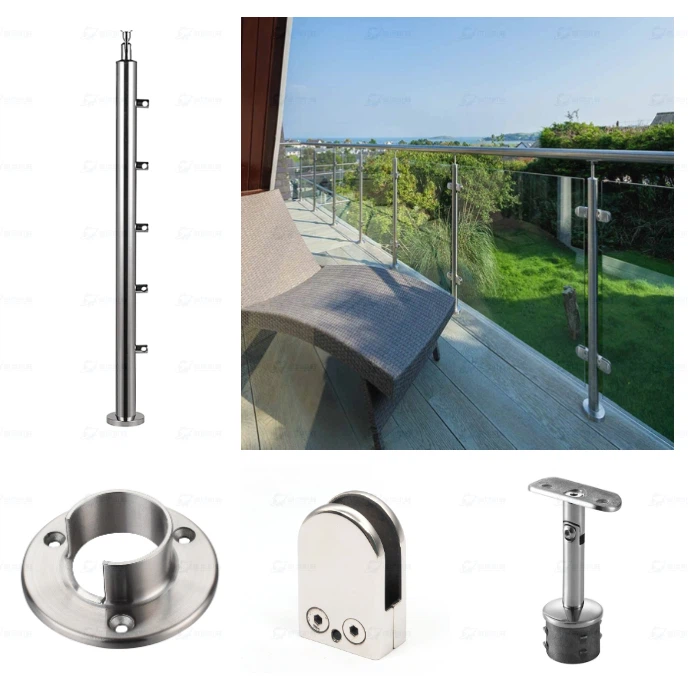
When it comes to our products, we offer a wide range of wall-mounted handrails, including Stainless Steel Marine Handrail Pipe Fittings, Wall Rail Mounting Metal Brackets, and Stainless Steel Wall Mounted Glass Handrail. Each type of handrail might require a different approach when it comes to painting.
If you're dealing with our stainless steel marine handrail pipe fittings, you'll definitely want to sand them lightly before painting. These fittings are often exposed to harsh marine environments, so a good paint job that adheres well is crucial for protection against corrosion.
Our wall rail mounting metal brackets can also benefit from sanding. They're usually made of sturdy metal, and sanding will help the paint bond better, ensuring a long-lasting finish.
For the stainless steel wall-mounted glass handrail, the metal parts of the handrail, like the brackets and supports, should be sanded before painting. The glass itself doesn't need to be painted, of course, but you'll want to make sure the metal components are properly prepared for a fresh coat of paint.
So, how do you sand a handrail? It's not too complicated, but there are a few things to keep in mind. First, you'll need to choose the right sandpaper. For most handrails, a medium-grit sandpaper, like 120 to 150 grit, is a good place to start. This will give you enough abrasion to rough up the surface without being too aggressive.
Before you start sanding, make sure to protect the surrounding area. You don't want to get dust and debris all over the place. You can use drop cloths or masking tape to cover nearby surfaces.
Start sanding in the direction of the grain if you're working on a wooden handrail. This will help prevent scratches and give you a smoother finish. For metal handrails, you can sand in a circular motion or back and forth, depending on the shape and texture of the handrail.
After you've sanded the handrail, use a clean cloth or a vacuum to remove all the dust. You don't want any dust particles getting trapped under the paint.
Once the handrail is sanded and clean, you're ready to paint. Choose a high-quality paint that's suitable for the material of your handrail. For metal handrails, look for a paint that's specifically designed for metal and offers good corrosion resistance. For wooden handrails, a latex or oil-based paint will work well.
Apply the paint in thin, even coats, allowing each coat to dry completely before applying the next one. This will give you a smooth, professional-looking finish.
In conclusion, whether or not a wall-mounted handrail needs to be sanded before painting depends on the material and condition of the handrail. In most cases, sanding can help improve the adhesion and durability of the paint job, but there are exceptions. If you're not sure whether your handrail needs to be sanded, feel free to reach out to us. We're here to help you make the best decision for your project.
If you're in the market for wall-mounted handrails or have any questions about painting or installation, don't hesitate to contact us for a consultation. We're happy to share our expertise and help you find the perfect handrail for your needs.

References
- "Painting and Finishing Metals" by The Home Depot
- "Wood Finishing Basics" by This Old House