

Hey there! As a supplier of lock components, I've been dealing with all sorts of locks and their parts for years. One question that often comes up is about the security levels of different lock components. In this blog, I'm gonna break it down for you.
Let's start with the basics. Locks are made up of several key components, each playing a crucial role in determining the overall security of the lock.
The Cylinder
The lock cylinder is like the heart of the lock. It's the part where you insert the key. There are different types of cylinders, and their security levels vary widely.
Pin tumbler cylinders are the most common type. They work by using a series of pins that need to be aligned at the shear line for the lock to turn. The more pins a cylinder has, the more combinations there are, and generally, the more secure it is. For example, a standard residential pin tumbler cylinder might have 5 or 6 pins, while a high - security one could have 7 or 8.
Another type is the wafer tumbler cylinder. These use flat wafers instead of pins. They're often found in some cabinet locks and are generally less secure than pin tumbler cylinders because they have fewer possible combinations.
High - security cylinders, like those with side - bar or disc - detainer mechanisms, offer much better protection. Side - bar cylinders use a bar that engages with notches in the key to unlock. Disc - detainer cylinders have rotating discs that need to be aligned correctly. These types of cylinders are much harder to pick and are commonly used in commercial settings or for high - value properties.
The Deadbolt
Deadbolts are a great addition to any lock system. They provide an extra layer of security. There are single - cylinder deadbolts and double - cylinder deadbolts.
Single - cylinder deadbolts are unlocked from the outside with a key and from the inside with a thumb turn. They're a popular choice for residential doors. However, they can be vulnerable to lock bumping, a technique where a specially made key is used to quickly open the lock.
Double - cylinder deadbolts require a key on both sides. While they offer more security against forced entry, they can be a safety hazard in case of an emergency, like a fire, because you need a key to get out.
The Escutcheon
Escutcheons are not just for looks; they also contribute to the security of the lock. A good escutcheon can prevent pry attacks. For example, our Brushed Stainless Steel Escutcheons are made of sturdy materials that can withstand a fair amount of force. They cover the area around the lock, making it harder for someone to access the lock mechanism and pry it open.
The Strike Plate
The strike plate is the part on the door frame where the bolt of the lock fits into. A weak strike plate can be easily kicked in, compromising the security of the entire lock. A heavy - duty strike plate, preferably one that is reinforced with longer screws that go deep into the door frame, can significantly improve the security. For example, a strike plate that is attached with 3 - inch screws instead of the standard 1 - inch screws will be much more difficult to dislodge.
The Shackle
In padlocks, the shackle is a critical component. There are different types of shackles, such as fixed and adjustable. A hardened steel shackle is much more secure than a standard steel one. Shackles can also be rated for different levels of resistance to cutting. For example, a high - security padlock might have a shackle that is resistant to bolt cutters, making it suitable for securing valuable items in outdoor settings.

Specific Lock Types and Their Components
Let's take a look at some specific lock types and how their components affect security.
Stainless Steel Quarter Turn Lock
The Stainless Steel Quarter Turn Lock is often used in cabinets and small enclosures. The security of this lock depends on the quality of the cylinder and the strength of the locking mechanism. A high - quality stainless steel construction makes it resistant to corrosion, but the key factor is still the internal components. If it has a well - designed pin tumbler cylinder with a sufficient number of pins, it can offer a decent level of security for its intended use.
Stainless Steel Thumb Turn Lock
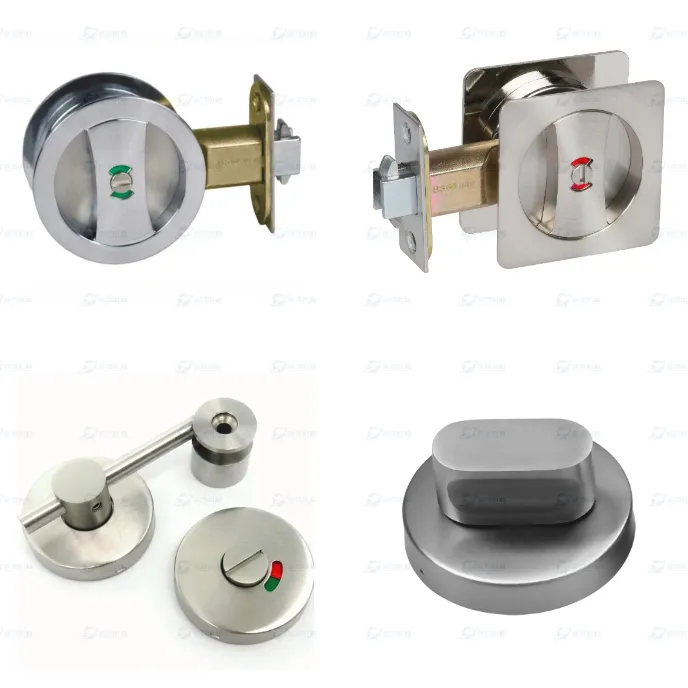
The Stainless Steel Thumb Turn Lock is commonly used on interior doors. It's usually less secure than a deadbolt but provides a basic level of privacy. The thumb turn mechanism itself is relatively simple, but if it's combined with a good - quality cylinder, it can offer some protection against unauthorized entry. However, it's important to note that these locks are not designed to withstand a lot of force.
Factors Affecting Security
It's not just the components themselves that determine the security level of a lock. Installation also plays a huge role. A poorly installed lock, even if it's made of high - quality components, can be easily compromised. For example, if the strike plate is not properly aligned or if the screws are not tightened correctly, the lock may not function as intended.
The environment in which the lock is used also matters. A lock that is exposed to harsh weather conditions, like extreme heat or cold, may deteriorate over time, reducing its security.
Conclusion
So, as you can see, the security levels of different lock components vary greatly. When choosing a lock for your property, it's important to consider the specific needs and the level of security required. Whether it's a high - security commercial lock or a simple residential lock, each component plays a vital role in keeping your property safe.
If you're in the market for lock components, we've got a wide range of high - quality products to choose from. Whether you need a new escutcheon, a sturdy deadbolt, or a reliable cylinder, we can help you find the right components for your needs. Don't hesitate to reach out for more information or to start a procurement discussion.
References
- "The Art of Lock Picking" by Deviant Ollam
- "Modern Locksmithing" by Jerry L. McNeil